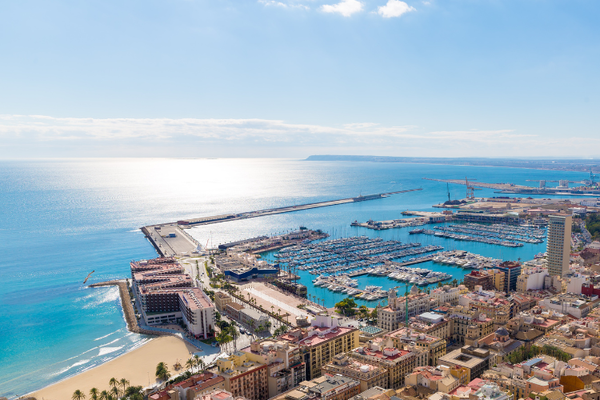
 Spain
Spain

Retirement in Portugal or Spain has become an increasingly discussed topic, particularly within travel communities. Both countries, situated on the Iberian Peninsula, rank among the most sought-after retirement destinations for expats seeking a tranquil and fulfilling lifestyle. When choosing between Portugal and Spain, it is worth noting that both offer compelling advantages, making either a strong option.
Portugal and Spain are neighboring countries, allowing for convenient travel between them. However, visiting a country is a different experience from living there and engaging with daily life.
Because Portugal and Spain are often more similar than different, expats find it hard to pick one country over the other for retirement. Having said that, this post tries to bring out the similarities and differences between these two nations, all in a bid to point you in the right direction. Stick around to find out which European country suits you!
Retirement in Portugal or Spain? Why expats choose them
As mentioned earlier, these two countries are quite popular among expatriates looking to retire in Western Europe. In fact, data from the two nations indicate a significant expat population that accounts for 5.4% in Portugal and 6% in Spain. However, the big question remains as to why these two nations are so popular.
A closer examination reveals that the answer to this question largely centers on the quality of life these two nations offer. The quality of life index considers various aspects of daily living, including security, cost of living, and overall life satisfaction among residents.
Both Portugal and Spain are widely recognized for providing a high quality of life, and it is therefore unsurprising that expatriates from around the world deliberately choose to retire in either country.
Similarities between the countries
Portugal and Spain are a lot more similar than different; also, the fact that they are bordering nations helps support this theory even further. To begin with, both Portugal and Spain are located on the Iberian Peninsula, which arguably provides the best weather across Europe.
Additionally, both countries experience enough sunshine all year round, making them an ideal place for anyone who loves outdoor activities. You’ll also find stunning Unesco world heritage sites in both Spain and Portugal!
Less widely known is the fact that Portugal and Spain share a history that dates back over 300 years, and notable cultural similarities can be observed, particularly in their culinary traditions. Another significant advantage is that both countries offer a relatively lower cost of living compared to most countries in Europe and North America, along with a slower-paced lifestyle that is well suited to individuals in their retirement years.
Portugal vs Spain for expats
Eventually, you will need to make up your mind and decide on one country. So just to give you an idea of what to expect, let’s first discuss what retired expat life looks like in these two countries.
About living retired in Portugal
Many people agree that Portugal is among the best countries to retire in around Europe for all the right reasons. First, Portugal’s beauty is nothing like you have seen anywhere else in the world. The combination of picturesque shorelines, golf courses, ancient architecture, and mossy stoned forests, makes Portugal quite a special place.
Although Portugal is smaller in geographical size, its natural beauty is nonetheless striking. Another noteworthy aspect is the widespread use of English, with many locals able to communicate fluently. In fact, the Portuguese government has made deliberate efforts to ensure that public service personnel are equipped to communicate effectively in English.
This goes a long way in ensuring the expat community lives and integrates into the community easily. There are plenty of tax incentives that retirees can take advantage of, for instance, the Non-Habitual Tax regime.
Finally, the Portuguese locals are so friendly and welcoming even to foreign nationals (via Internations). Expats in Portugal report that they feel welcomed by the foreign locals within the neighborhood.
- Read also: The Main Pros And Cons Of Retiring In Portugal.
About living retired in Spain
If warm weather and excellent quality of life are anything to go by, then retiring in Spain is worth exploring. Other than that, Spain has a lot more benefits to offer foreign nationals who choose to retire in this country. The promise of a cheaper retirement and relatively cheaper living costs are just a few options from which retirees can benefit.
When it comes to the cost of living, retirement in Portugal is even cheaper, but in the grand scheme of things, both countries offer affordable living compared to other countries in Europe.
Spain is also well known for its healthy lifestyle, largely attributed to its Mediterranean cuisine and strong outdoor culture. Similar to Portugal, Spain offers abundant natural and cultural beauty, including ancient architecture and pristine beaches, among many other attractions.
- Read Also: Types Of Visas For Spain: All Options For Expats.
Differences between the countries
For expats considering a life in either European country, you should be aware that despite the similarities, Portugal and Spain are fundamentally different nations.
In this regard, both nations have individual differences, especially regarding the key factors that affect daily living. Let’s discuss some of these factors and how they differ in both countries; tag along!

Cost of living in each country
It goes without saying that the cost of living is often the main reason expats choose to settle permanently or retire in either of these countries. While both countries offer a cheaper cost of living, Spain is relatively more expensive than Portugal.
According to data provided by Numbeo, the cost of living without rent is 5.2% lower in Portugal than in Spain.
While living in the two major cities in Portugal; Lisbon and Porto, are often considered expensive, Madrid and Barcelona have relatively higher costs of living. To put this into perspective, here is a comparative cost summary between the two countries.
| Expenses | Portugal | Spain |
|---|---|---|
| Rent for a one-bedroom apartment | €897.96 | €882.93 |
| Monthly expenses for one person without rent | €669.6 | €706.4 |
| Rent for a three-bedroom apartment | €1,498.89 | €1,392.34 |
| Monthly expenses for four people without rent | €2,422.8 | €2,549.9 |
Estimates are from Numbeo (as of January 2026).
It is important to mention that the cost of living is largely dependent on your individual spending habit. While data might show that retirement in Portugal is relatively cheaper, it is always good practice to live below your means regardless of the city.
One rule of thumb to live by if you want to save yourself some money is to live in smaller towns instead of the city capital, which has a lot of foreign influence.
Taxes
For anyone thinking of retiring or moving to a different country, the biggest concern is often how to navigate taxes and maximize financial opportunities. The good news is that both Portugal and Spain have evolved their tax systems to create clear pathways for different types of expats. You just need to understand which door opens for you.
Portugal’s original Non-Habitual Resident (NHR) regime officially closed to new applicants, with final transitional applications ending in March 2025.
For those who qualified under the old system, benefits continue through 2033. The country has introduced a replacement called IFICI (Tax Incentive for Scientific Research and Innovation), often referred to as NHR 2.0. This new tax regime offers a 20% flat rate on Portuguese employment income and an exemption on most foreign-sourced income. NHR 2.0 comes with stricter eligibility focused on highly qualified professionals in the technology, research, and innovation sectors.
For new retirees and most general expats, Portugal now operates under its standard progressive tax system, with rates ranging from 14.5% to 48%.
While this represents a shift from the generous old NHR regime, Portugal remains an attractive destination with excellent quality of life and a comparatively lower living costs.
Spain has positioned itself as an increasingly compelling option, particularly for active workers and digital nomads.
The country’s Beckham Law offers a flat 24% tax rate on Spanish-sourced income up to €600,000 (with 47% applying above that threshold) for up to six years.
Under this regime, foreign-sourced income, including most dividends, interest, rental income, and capital gains earned outside Spain, is exempt from Spanish taxation.
Digital Nomad Visa holders can now access the Beckham Law if they’re employed by a foreign company, making Spain particularly attractive for remote workers.
The application must be submitted within six months of registering with Spanish Social Security or starting work. Eligibility requires not having been a Spanish tax resident in the previous five years.
For retirees not qualifying for special regimes, Spain applies progressive rates from 19% to 47%, similar to Portugal’s standard system.
Spain also has a Solidarity Tax on Large Fortunes for individuals with net wealth exceeding €3 million after deductions. The current tax rates are from 1.7% to 3.5% 2026. This typically affects only high-net-worth individuals and varies somewhat by region.
Both countries offer excellent weather, rich culture, affordable living compared to Northern Europe or North America, and welcoming expat communities. With thoughtful planning and professional tax advice, you can make either destination work beautifully for your retirement or relocation dreams. The important thing is to plan ahead, understand the requirements, and apply for any special regimes within the required timeframes.
- Check out our article: NHR Regime in Portugal Updates 2024: The end or not?
Transport
Both European countries have excellent means of transport systems. The road networks are vast, with several means of transportation at your disposal. You can use trains, taxis, city buses, or even personal vehicles to move from one point to the other. In Portugal, the public transport system is quite efficient and is relied upon by the local population to commute to work every day.
Nonetheless, Spain’s national roads are also better than Portugal’s. In fact, some sections of four major motorways are completely toll-free. However, fuel prices in Portugal are generally higher than in Spain, where a liter of gasoline costs €1.79 in Portugal and €1.59 in Spain, according to data provided by Numbeo.
Climate
Both Spain and Portugal are located in western Europe, so both nations have almost the same climatic conditions all year through. Spain and Portugal experience the Mediterranean climate that promises more sunshine than most European countries.
However, Portugal experiences better climatic conditions than Spain. The Algarve region in Portugal is popular not only for its scenic beaches but also for perfect weather.
During winter, temperatures in this region rarely exceed 16 degrees Celsius (approximately 66 degrees Fahrenheit). December is typically the wettest month, with an average of about 12 days of rainfall. By contrast, northern Portugal, particularly Porto, generally experiences colder temperatures and wetter winters than the southern regions.
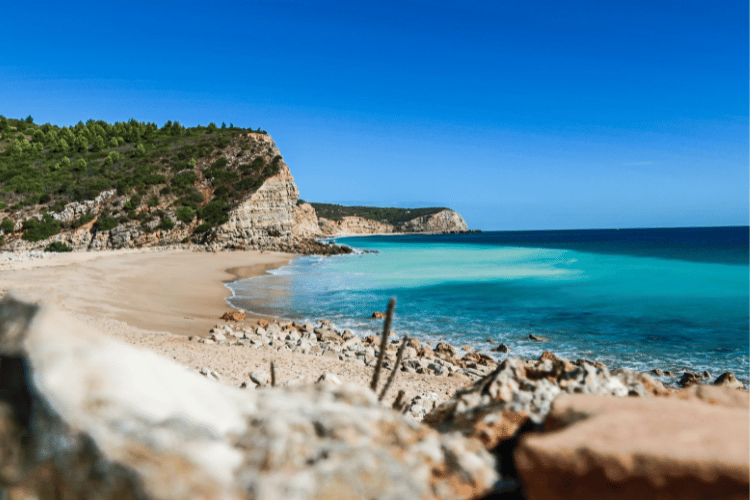
Spain, on the other hand, is also known for its warm summers and cold winters. Owing to the fact that Spain is much larger than Portugal, you can expect a little bit of everything as far as climate is concerned.
If you are looking for cold winters with some snow, then the mountainous regions of Spain have exactly that. But let’s face it, what retirees are looking for when they choose to immigrate to either Spain or Portugal is pleasant weather. So, in this regard, retirement in Portugal takes the day when it comes to warmer climatic conditions.
Security
As mentioned before, one thing that contributes to the overall quality of life in any particular country is safety. While both countries are considered generally safe, Portugal is by far safer than Spain. In fact, according to the Global Peace Index, Portugal ranks 7th.
Violent crimes in Portugal are almost nonexistent thanks to the strict laws regulating gun ownership. Spain, on the other hand, is ranked 32nd on the same index.
Generally, Spain is considered a safe country to live in; however, you need to take precautionary measures to keep your valuables safe from pickpocketers. Street crimes and scams are quite popular, especially in the city of Barcelona.
The increased level of insecurity in Spain is a result of the increased level of unemployment. Spain is among the countries with the highest unemployment rates in Europe, currently standing at 13% via Trading Economics.
Portugal, on the other hand, has one of the lowest unemployment rates in Europe, at approximately 5.9%. Nevertheless, one factor common to both countries is the exceptional friendliness of the locals, who are often willing to go out of their way to assist others, including foreign nationals. Overall, both European countries are considered safe and welcoming destinations for expatriates.
Entertainment
Both nations are extremely beautiful, with plenty of attractive sceneries waiting to be explored. To begin with, Portugal has some of the most beautiful beaches in the world where you can sunbathe and enjoy your time by the ocean. However, if you love your time out in the wild, the islands of Madeira and Azores have one of the best terrains in Europe. Spain, on the other hand, has its fair share of things you can do.
Discovering the beautiful and unique architecture in Barcelona is one of the things every expat has to do. It goes without saying that both Portugal and Spain are well known for their love of football. In fact, locals are often considered overly fanatics of this game.
The three major football clubs widely regarded as most prominent in Portugal are FC Porto, SL Benfica, and Sporting CP. By contrast, Spain’s football league is larger and features numerous internationally renowned teams, including FC Barcelona and Real Madrid, among others
How to get a visa in each country
Both Spain and Portugal are members of the Schengen region, therefore, have similar processes for getting a visa. There are different types of visas that you can apply for depending on the purpose of the visit. The type of visa that grants you entry and stay in Portugal as a retiree is the D7 Visa. For Spain, you can retire with a Non-Lucrative Visa.
While the visa application process is largely similar in both countries, the Golden Visa programs differ significantly. In Portugal, foreign nationals may become eligible for permanent residency or citizenship after five years of legal residence. By contrast, expatriates in Spain are generally required to reside in the country for more than ten years before becoming eligible for citizenship.
Bottom Line: retirement in Portugal or Spain?
Do you see yourself during your retirement in Portugal or Spain? Well, you should know that there is no wrong or right answer to this question. You, however, need to do a lot of due diligence to gather enough information on which is the best European country for you.
Nonetheless, both countries have so much to offer when it comes to a quality life for your golden years. It doesn’t matter if you prefer Spain or Portugal. And Viv Europe can help you get a Residence Visa for both!
If you need help navigating the immigration process, book a consultation with our professionals at Viv Europe. Our Facebook Group – All About Portugal For Expats, can also help you decide which nation is better for you; ask questions and make new friends who can guide you!