 Portugal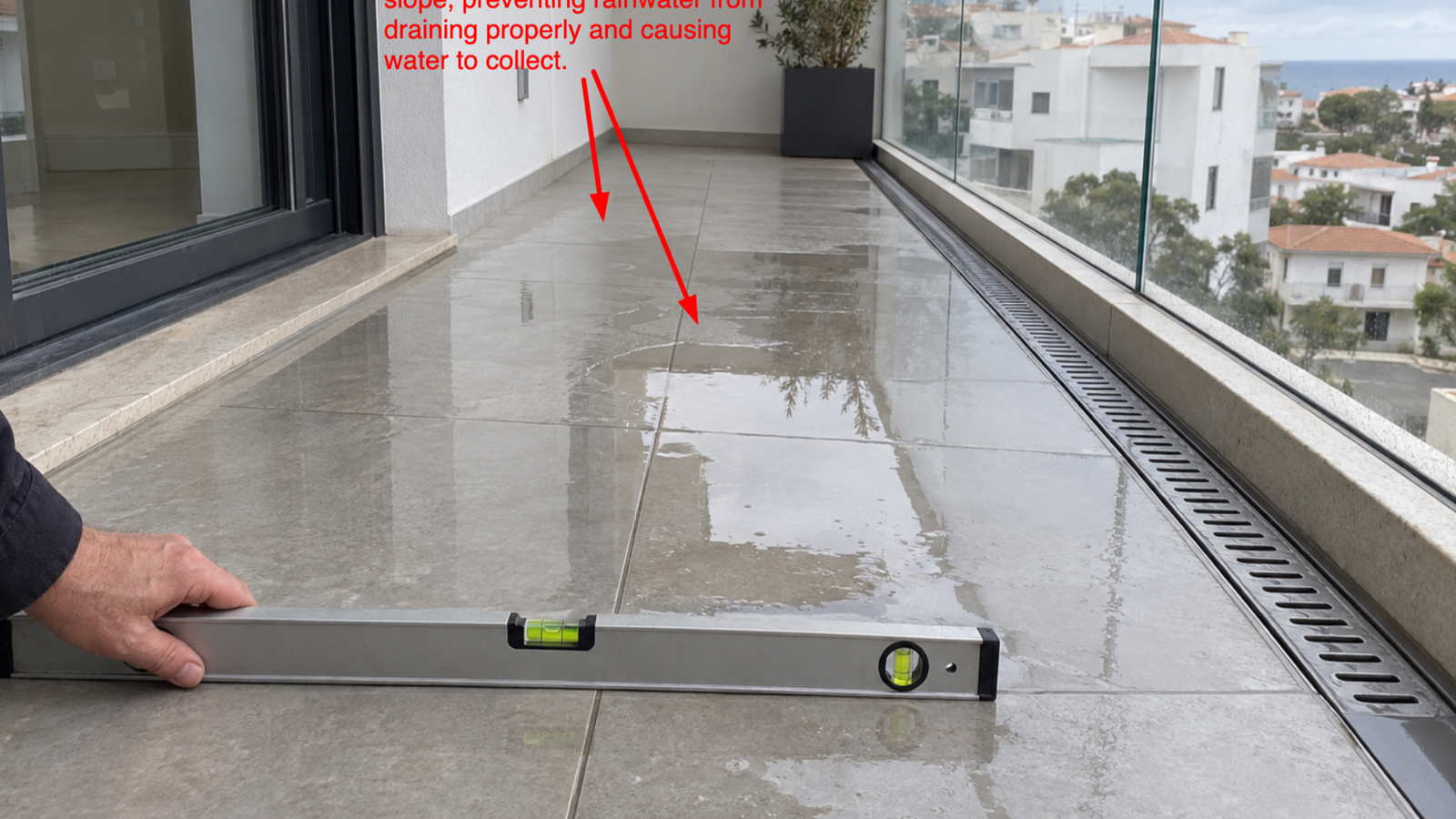
Buying a new build in Portugal feels like the low risk choice. Nothing is worn out, nothing has been badly repaired by a previous owner, and everything is under warranty. Most buyers arrive at the handover expecting a formality.
It is not a formality. It is the last moment when the person who built the property is still responsible for putting things right easily.
New does not mean finished
A new home is not assessed the way an older one is. Nothing has aged, so there is no wear to judge. The question is simpler: did they build and install what was actually sold to you?
That makes the handover a comparison rather than an opinion, and three documents carry it: the ficha técnica da habitação, the technical data sheet recording the construction and who was responsible for it; the mapa de acabamentos, the finishes schedule, setting out which material goes where; and the plantas, the dimensioned floor plans.
The finishes schedule does most of the work, and buyers have most often never opened it. It is not marketing material. Where a property was bought off plan it is normally annexed to the promissory contract, alongside the caderno de encargos, which makes it a description of what the developer undertook to build rather than what they hoped to sell. It is the difference between saying a kitchen feels cheap and saying it is not the kitchen you bought.
If you do not have all three, ask for them now rather than on the day. They are yours, and a week is long enough to read them properly.
What tends to be wrong
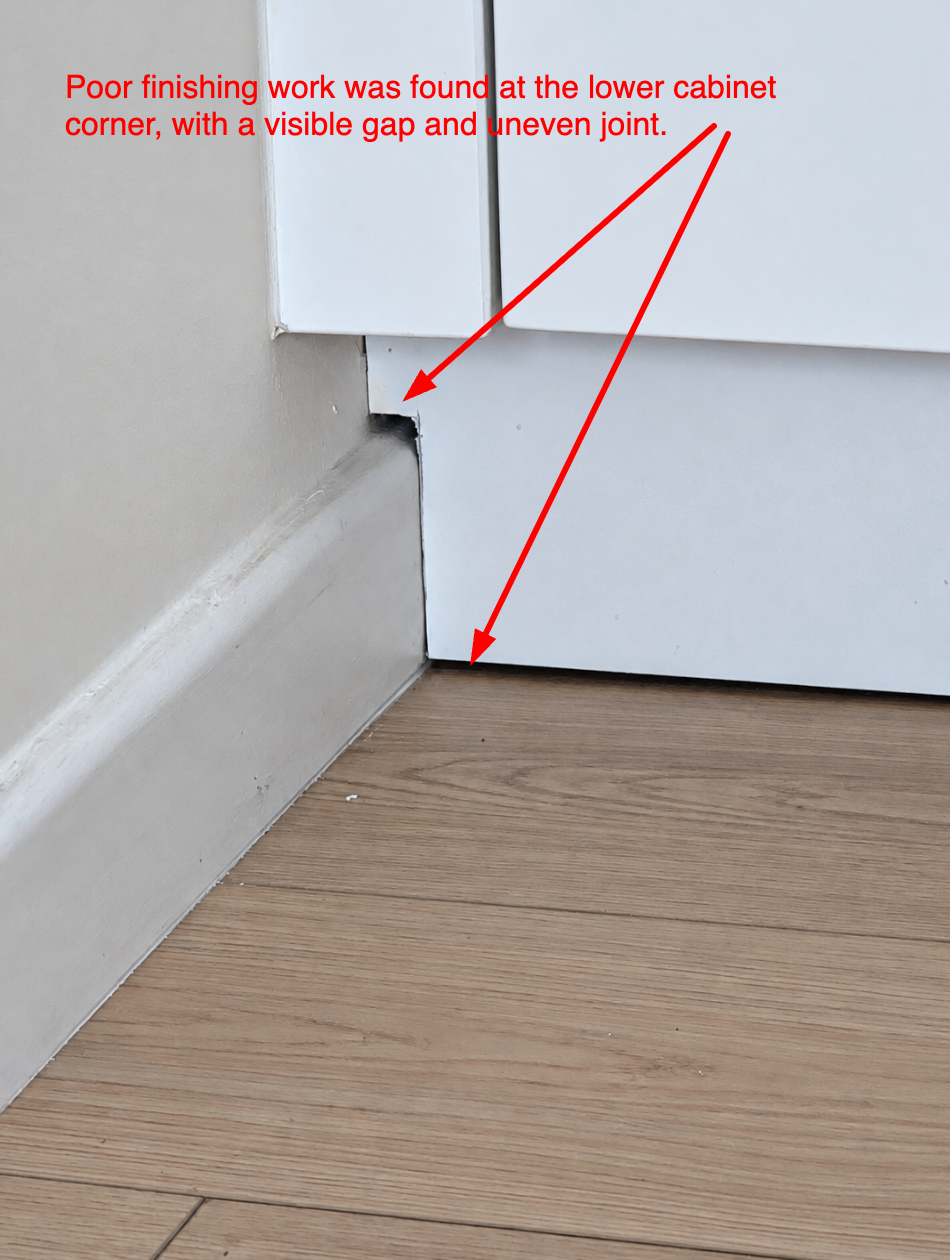
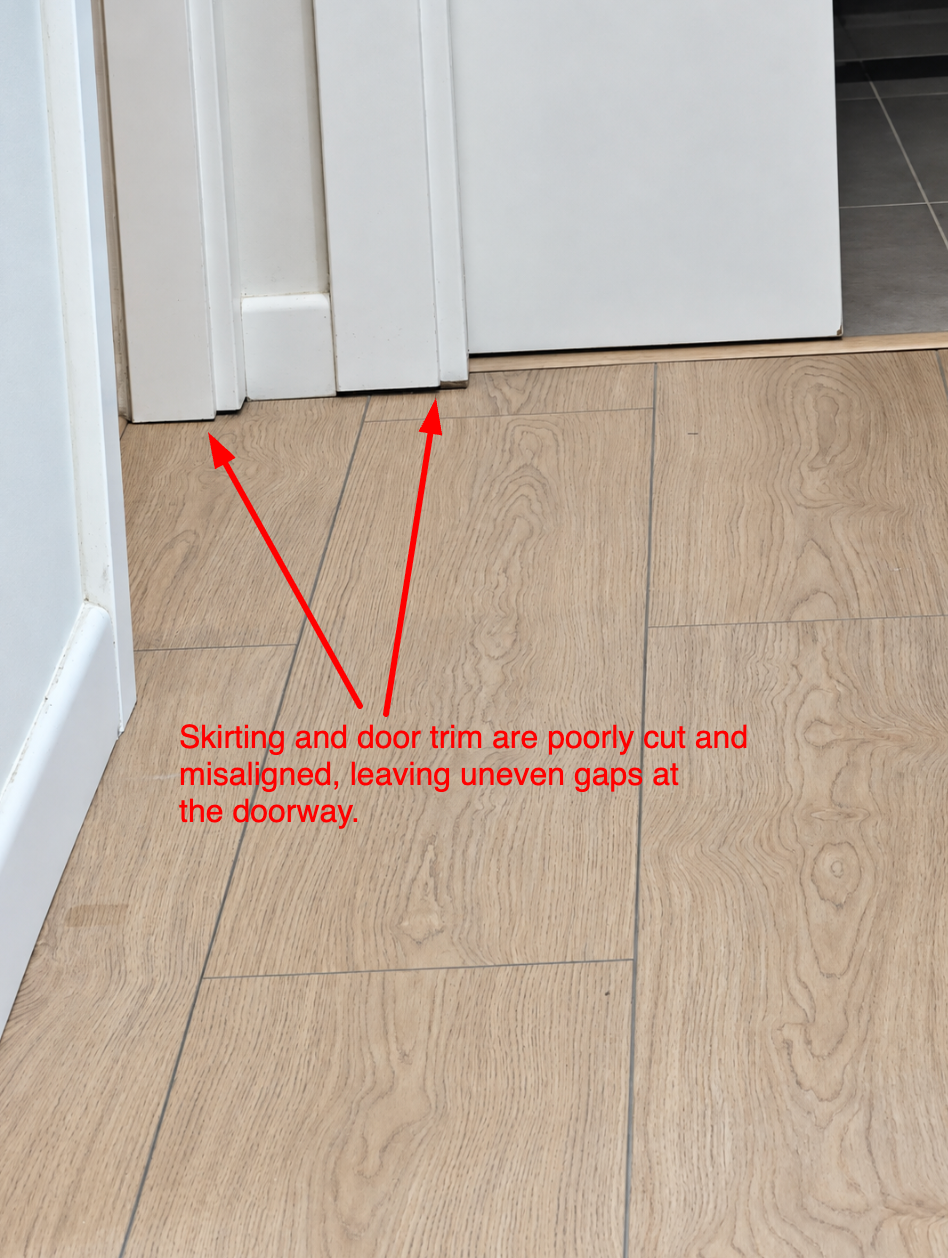
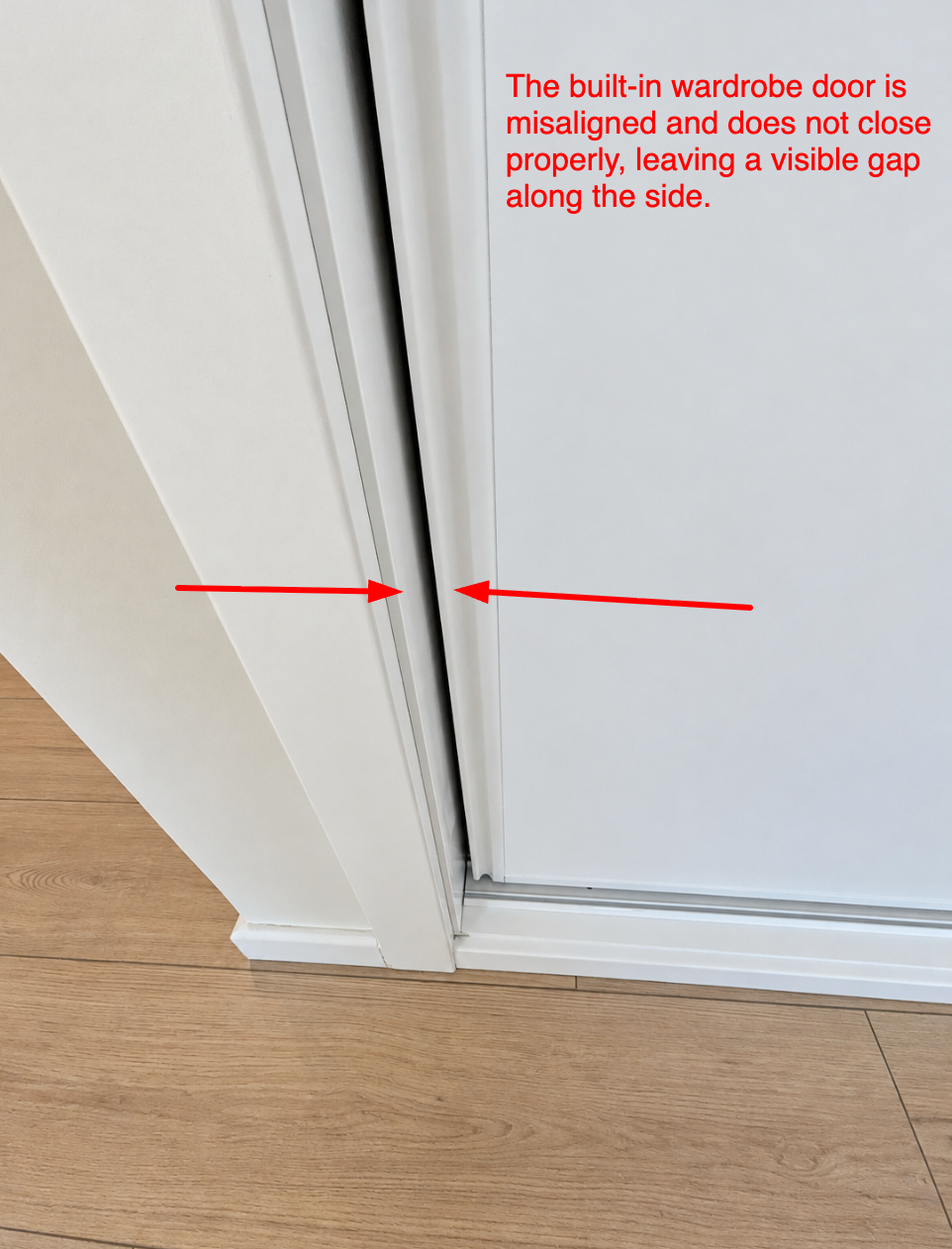
Very little of it is dramatic. Almost none of it is structural. Most of it is finishing work: doors and cabinet fronts that catch, sealant missing around a shower tray or a window, floors that are not level, joinery and cupboards that do not line up. Individually trivial, and expensive only if you accept it and pay to fix it yourself later. The items below are the ones worth the effort.
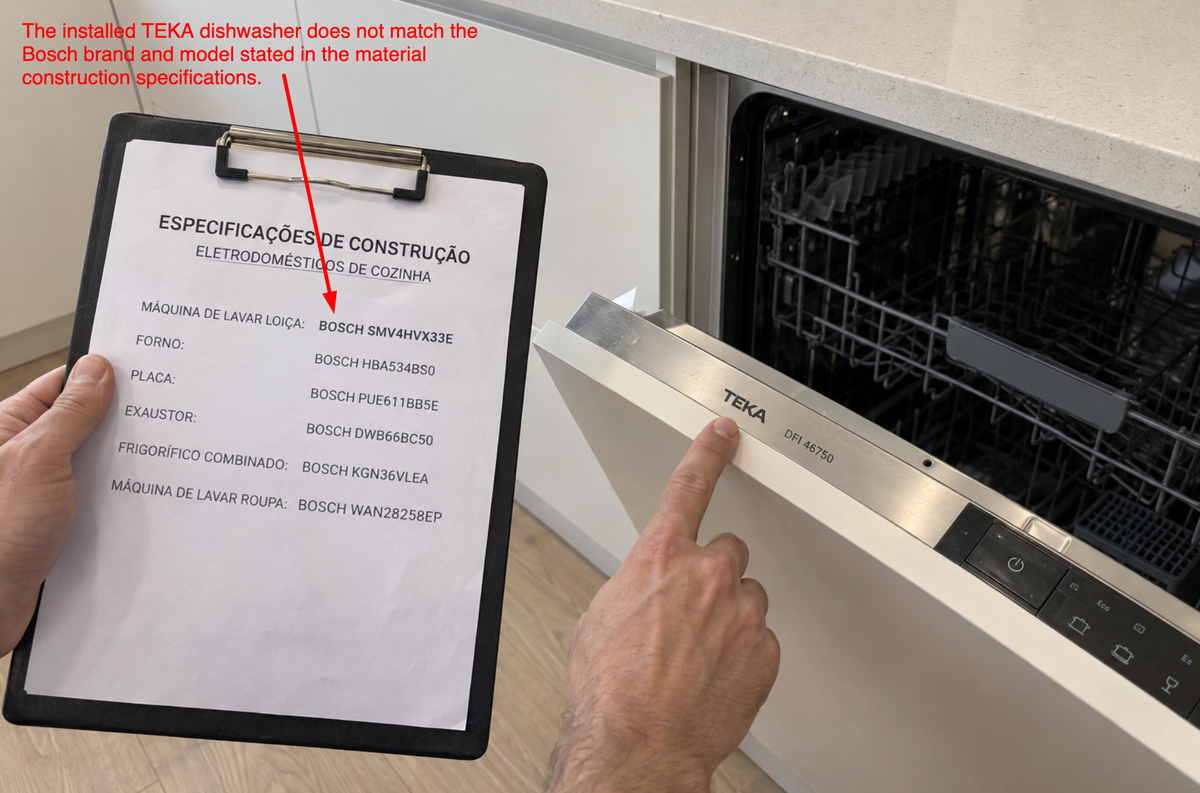
Things installed that are not what was specified. A properly drafted schedule does not promise "quality appliances". It names a manufacturer and a model reference: a particular oven, a mixer from a stated range, a tile in a given format. A brand badge confirms little, because the same manufacturer sells across a wide price range. What identifies the machine is the model plate inside the door, and the maker's mark cast into the body of a mixer. Substitutions are rarely dishonest: something was unavailable and the site bought the nearest equivalent. But across a kitchen and two bathrooms, the gap between the range specified and the entry level model wearing the same badge can easily run into four figures, already paid for.
Terraces and balconies that drain the wrong way. Nothing else on this list costs as much to put right once it has gone wrong, and it is a detailing failure rather than a workmanship one. A terrace above a habitable room has to fall away from the building toward its outlet, and the waterproofing beneath the finish has to return up the perimeter walls and behind the door threshold. Two things go wrong repeatedly. The outlet is set flush with, or fractionally above, the surrounding finished level, so water stands rather than leaves. And the threshold is built level with the interior floor, because a flush transition onto the terrace is what buyers here want to see, which removes the upstand that keeps driven rain out of the room behind. Both cost very little to put right while the builder is on site, and a great deal once the ceiling below is stained.
Ventilation that was never completed. Extractors fitted and wired but discharging into a false ceiling, a roof void, or a riser never connected through. Older housing here leaked air through single glazing and unsealed frames, which kept moisture moving. Current construction is far more airtight, and an airtight building with ventilation that does not work is where damp problems in a two year old apartment begin.
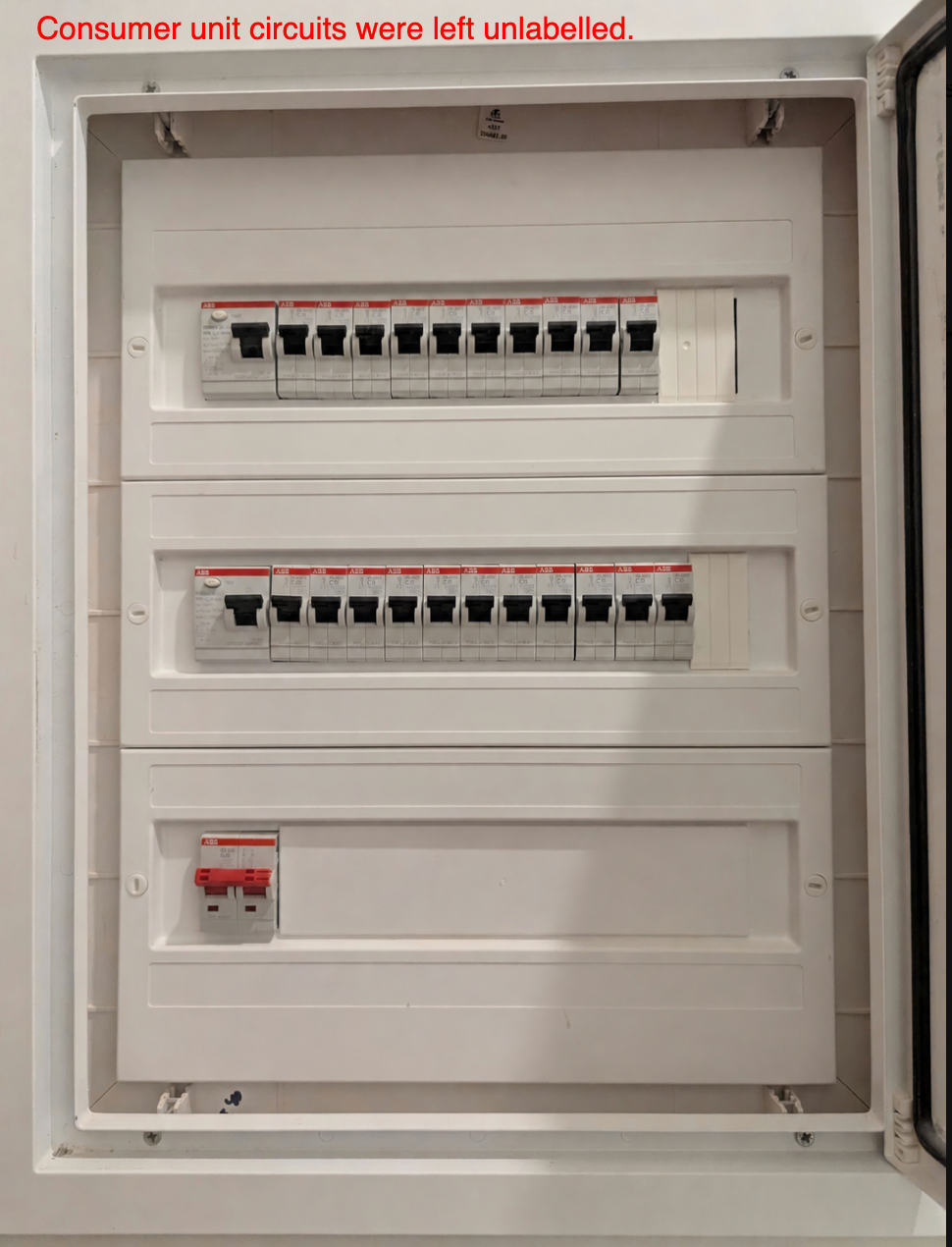
Electrical work that was never finished off. Circuits left unlabelled at the consumer unit, a socket fitted but never made live, a light or an extractor wired to the wrong switch. Small things individually. But the consumer unit sits behind a door nobody opens at a handover, and it is the part of a home a buyer is least able to judge for themselves.
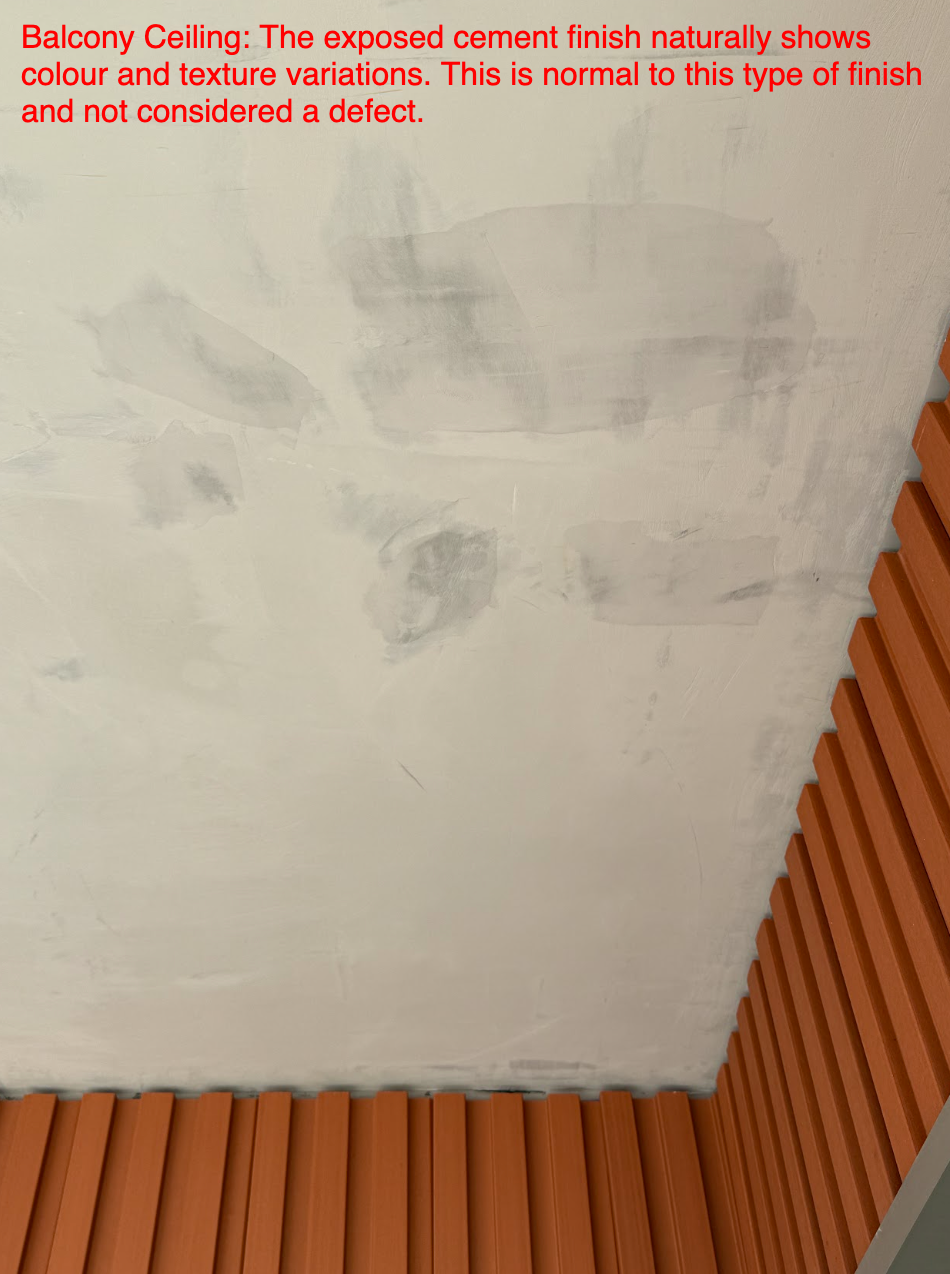
And some of it is not wrong at all. Foreign buyers frequently flag things that are entirely correct. A cooker hood with no duct to the outside is usually a recirculating unit, and if that is what the schedule specified, the missing duct is not a defect. Fine cracking at wall and ceiling junctions through the first winter is a building drying out, not a building moving. A textured or brushed cement finish on a balcony or a wall is meant to vary, and the shading, patchiness and uneven texture that would look like staining on smooth render are simply how that finish behaves. There is nothing there to put right. The document decides, not the appearance.
Why the timing matters
Once you have signed and taken the keys, the conversation changes. You are no longer a buyer completing a purchase but an owner making a complaint, and the developer has your money.
Portuguese new builds carry warranty protection, so you are not without recourse, and your lawyer can tell you exactly what your contract gives you. But a defect raised at handover, while the builder's team is on site and the final payment has not moved, is not the same as one raised eight months later by email. The first gets fixed in an afternoon. The second becomes a project.
In practice that means going round the property a few days before the deed rather than on the day, with the documents in hand, and coming away with a written list and photographs. Some of it you can see for yourself: an appliance that is not the model named, a tap from the wrong range, a door that catches. Some of it, the falls on a terrace or what sits behind the consumer unit, you cannot, and those are the items to ask the site manager to walk you through while you are both standing there.
Handing that list over before you have even moved in can feel like starting badly with the people who built your home. In practice it works the other way round. A list that is specific, photographed and tied to the developer's own specification is far easier for a site manager to act on than a year of irritated messages, and good developers prefer it. Say what was found and where, and what the documents said it should be. Do not speculate about blame. It is a comparison, not an accusation.
If you take one thing from this
A new build is the easiest property in Portugal to get right and the easiest to get wrong quietly. Nothing looks bad, because nothing has had time to look bad, and a terrace that drains the wrong way looks exactly like one that does not until the rain arrives. That week before the deed is worth more than all the warranty that follows it.
About the author
Caryn Pamorca is a civil engineer and the founder of PIDS Home and Property Inspection, an independent inspection service for buyers across Portugal. Inspections are carried out by qualified Portuguese architects and civil engineers, with a detailed report in English and Portuguese within 48 hours.
This is a guest article. Viv Europe helps people move to Portugal and Spain, and works with independent specialists in the areas outside our own remit. It is general information, not legal or technical advice on your own property.