 Portugal

It's one of the most asked questions in expat groups, and the answers there contradict each other. Someone flew to the US and back with an expired card and no problem. Someone else got stopped at check-in. Both stories can be true, which is exactly why anecdotes are a bad basis for booking a flight.
So this guide sticks to what the law and AIMA actually say. It covers three situations: a D visa that expired before your AIMA appointment, a residence card that expired while your renewal is pending, and what happens at the Schengen border when your document is out of date.
Quick note before we start: this is general information, not legal advice, and these rules change often. Check your own case with AIMA or an immigration adviser before you book anything.
The short answer
- An expired D visa no longer works as an entry document. If you leave Portugal before you have your residence card, don't count on getting back in on it.
- There's no decree extension in force for expired residence documents. The last one ended on 15 October 2025, and the grace period that followed for older cards ended on 15 April 2026.
- What does apply today is a six-month rule: your right of residence doesn't lapse until six months after your card expires. That's Portuguese law and it works inside Portugal.
- AIMA doesn't issue travel letters, and it advises travelling with your residence card. An expired card plus a receipt is a risk at check-in and at the border.
- At the border, an expired card can get you treated as a short-stay visitor: logged in the EES and counted against the 90/180 rule.
Situation 1: your D visa expired before your AIMA appointment
Start with what the visa actually gives you. A Portuguese residence visa (the D visas, like the D7 or D8) allows two entries and is valid for four months, according to the Ministry of Foreign Affairs visa portal. You're meant to apply for your residence permit with AIMA during that time. The same rule is in article 58 of the Foreigners Act (Lei 23/2007): the visa exists so you can enter Portugal and ask for a residence permit.
In practice, AIMA appointments don't always land inside those four months. So the visa runs out while you wait. That on its own doesn't cancel your process. What changes is travel.
Can you leave and come back on an expired visa?
Nothing in the rules we checked lets an expired visa work as an entry document. For a while, a COVID-era decree kept expired visas and residence documents valid inside Portugal, but AIMA's own FAQ says that cover ran until 30 June 2025, and even then it was limited to Portugal. Entry into and movement around other Schengen countries stayed under the Schengen Borders Code. The decree that came after it, Decreto-Lei 85-B/2025, covers residence authorisations only. It doesn't mention visas.
AIMA is also clear that the receipt for a first residence permit application is not a travel document and can't be used to move around the Schengen area. If you leave Portugal, you need a valid travel document and you have to meet the entry rules of wherever you're going. That same FAQ is the source.
Put together: if your visa has expired and you don't have your card yet, leaving Portugal means you may not be able to come back in on that visa. Plan as if you'd be starting over.
What to do instead
- Stay in Portugal until you have your residence card, if you possibly can.
- Keep proof of everything: your visa, the date you asked for the appointment, and any email from AIMA confirming it. Save them as PDFs and keep printed copies too.
- Talk to AIMA through its official channels only. AIMA set up an online route for consular visa holders through its contact form (Autorização de Residência, then Autorização de Residência com Visto Consular). Its March 2026 FAQ also lists geral@aima.gov.pt. Paid appointment sellers are not an official channel.
If you truly have to travel, for a family emergency say, get advice on your specific case before you go, not after you land.
Situation 2: your residence card expired while your renewal is pending
Is there a decree extension right now?
No. Here's how the last round ended. Decreto-Lei 85-B/2025 said that residence authorisations that expired between 22 February 2020 and 30 June 2025 were accepted until 15 October 2025. On that date AIMA announced the end of automatic extensions by decree. AIMA then clarified that people in that group kept their right of residence until 15 April 2026.
That date has passed. As of 23 September 2026 we found no newer decree in the Diário da República extending expired residence documents. If you read in a group that "cards are extended until next year", ask for the decree number and check it.
The rule that applies today: six months
The regulation to the Foreigners Act, article 63(14) of Decreto Regulamentar 84/2007, says your right of residence doesn't lapse until six months after the card you're renewing expires. AIMA's October 2025 clarification applies it to cards that expired after 30 June 2025, and tells you to carry the expired card together with the receipt showing you asked for the renewal.
The receipt itself has legal weight too. Under article 78(7) of Lei 23/2007, the renewal receipt has the same effects as your residence card for 60 days, and that period can be renewed. Decreto-Lei 85-B/2025 also says AIMA's proof of payment of the renewal is valid for 180 days from the date it's issued.
One change to know about: since 11 September 2026, a renewal no longer counts as approved just because AIMA misses its 60-day decision deadline. Lei 62/2026 removed that automatic approval. So a pending renewal won't turn into a new card by itself, and you should plan trips around the receipt and the six-month window, not around an expected decision date.
One hard limit: once your card has been expired for more than six months, you can't renew it. gov.pt says you have to apply for a new residence authorisation at AIMA instead.
Does the receipt let you travel?
Inside Portugal, the six-month rule and the receipt are what you show to employers, banks, the health service and other Portuguese bodies. That's what these rules were written for.
Travel abroad is different. When AIMA answered this question about the earlier extensions, it said they bound Portuguese authorities only, and that entry into other Schengen countries follows the Schengen Borders Code. Its March 2026 FAQ goes further: AIMA does not issue declarations for travel, and it advises people to travel with their residence card.
We found no AIMA statement saying an expired card plus a renewal receipt is enough to leave and come back. So treat it as not guaranteed.
Within Portugal and Schengen vs flying back from the US
Moving around inside Portugal is covered by the six-month rule. Carry your passport, your expired card and your receipt.
A trip to another Schengen country is where it gets uncertain. The Portuguese rule doesn't bind Spain or France, and you'd be relying on their border and police officers accepting your papers.
Flying back from the US or any other non-Schengen country carries the most risk. First the airline checks your documents before you board. EU rules make carriers responsible for checking passengers' entry documents and let states fine carriers that get it wrong, so a check-in agent faced with an expired card has a reason to say no. We found no official airline guidance on Portuguese renewal receipts, so ask your airline in writing before you fly. Then the border officer in Lisbon, Porto or Faro makes the entry decision under Schengen rules.
There's one more reason to think twice before leaving. The Foreigners Act has a route for people who haven't left Portugal and whose right of residence has lapsed (article 122(1)(j)). It only works if you stayed.
Situation 3: getting back into Schengen, the 90/180 rule and the EES
As a visitor, a non-EU national can stay up to 90 days in any 180-day period. The EES counts that as one period across all the countries that use it, not per country. Our guide to the 90/180 rule walks through how the count works.
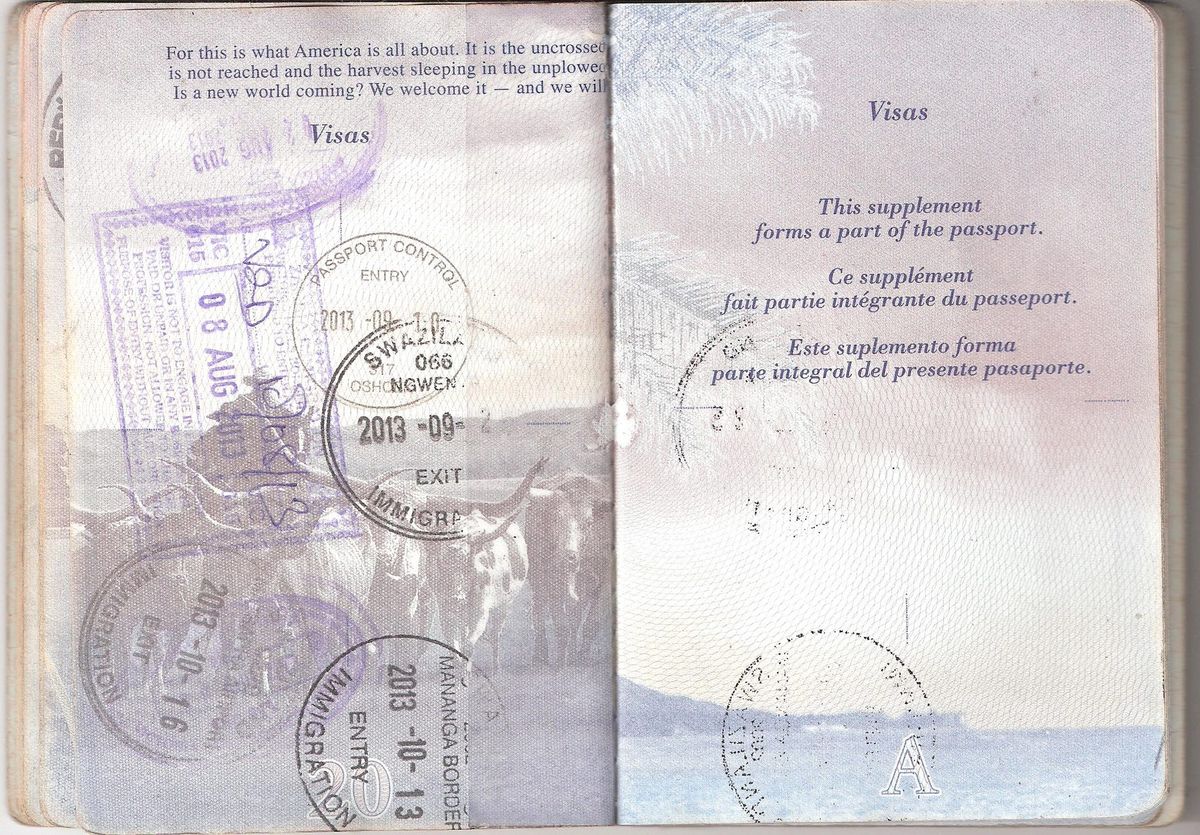
Residents play by different rules. The European Commission says holders of a residence permit or a long-stay D visa aren't limited by the 90/180 calculation in the country that issued it, and the Entry/Exit System doesn't apply to holders of residence permits and long-stay visas.
Here's the problem. Both of those exemptions depend on you holding a valid document. With an expired card, a visa-exempt traveller, and the US is on the EU's visa-free list, can end up being checked in as a short-stay visitor. That means an EES record and days that count toward your 90. If your nationality needs a Schengen visa, an expired card can mean you don't have what you need to board at all.
The EES is no longer a future plan. According to the EU's EES FAQ, it has been fully operational at all external border crossing points since 10 April 2026. It records your entries and exits along with your facial image and fingerprints, it replaced passport stamps, and its automated stay calculator and list of overstayers are now running. Staying beyond 90 days in any 180 is dealt with under EU and national rules.
So if your renewal is still pending and you come back in as a visitor, the clock is now automatic. A slow renewal plus a few trips can use up your days faster than you think.
Before you book a flight: a checklist

- Check the expiry date on your card or visa, and on your passport.
- Renewing? The law says to ask for renewal at least 30 days before your card expires, and gov.pt says you can start from 90 days before. Do it early and most of this article won't apply to you.
- Download your renewal receipt and proof of payment. Check the dates on both.
- Card expired? Treat any trip outside Portugal as a risk until the new card is in your hand. AIMA's advice is to travel with your residence card.
- Visa expired before your appointment? Keep the appointment proof and don't leave unless you've accepted you may not get back in on that visa.
- Know whether your nationality needs a Schengen visa. If it does, an expired card is a much bigger problem.
- If you might re-enter as a visitor, count your 90/180 days before you go.
- Ask your airline in writing what it will accept, and keep the reply.
- Put your question to AIMA through its contact form or geral@aima.gov.pt, and keep the written answer.
Frequently asked questions
Can I leave Portugal with an expired residence card and a renewal receipt?
The hard part is getting back in, not leaving. Portuguese law gives the receipt the same effects as your card for 60 days, renewable, but AIMA doesn't issue travel declarations and advises travelling with your residence card. Airlines and border officers apply Schengen rules, so there's no guarantee they'll accept it.
Is there a decree extending expired residence documents in 2026?
No. Decreto-Lei 85-B/2025 accepted cards that expired between 22 February 2020 and 30 June 2025 until 15 October 2025, and AIMA said that group kept their right of residence until 15 April 2026. Both dates have passed. As of 23 September 2026 we found no newer decree.
Does the six-month rule mean my expired card is still valid for travel?
Not necessarily. Article 63(14) of Decreto Regulamentar 84/2007 keeps your right of residence alive for six months after expiry. That protects your status in Portugal. It doesn't turn an expired card into a valid document for airlines or other Schengen countries.
Can I re-enter Portugal on an expired D visa?
Don't count on it. A residence visa allows two entries and is valid for four months. Once it has expired, nothing in the current rules lets you use it to enter, and AIMA says the receipt for a first residence permit application isn't a travel document.
Will coming back on an expired card count against my 90 days?
It can. Residence permit and long-stay visa holders are exempt from the EES and from the 90/180 count. With an expired card, a visa-exempt traveller such as a US citizen can be processed as a short-stay visitor, logged in the EES, with the days counted.
Still choosing a visa, or want the process planned so your dates don't collide with your travel? Start with our overview of Portugal's residence visas, or book a free consultation and tell us where you are in the process.