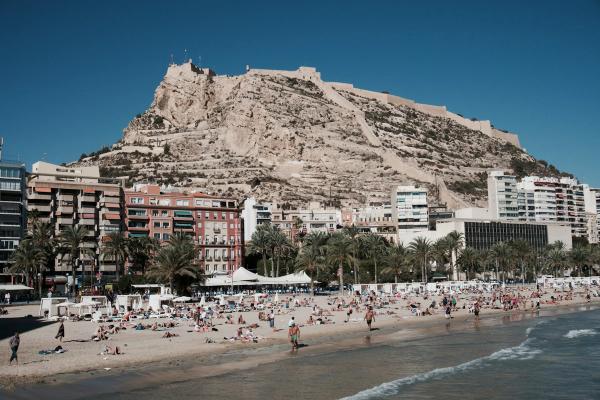
 Spain
Spain
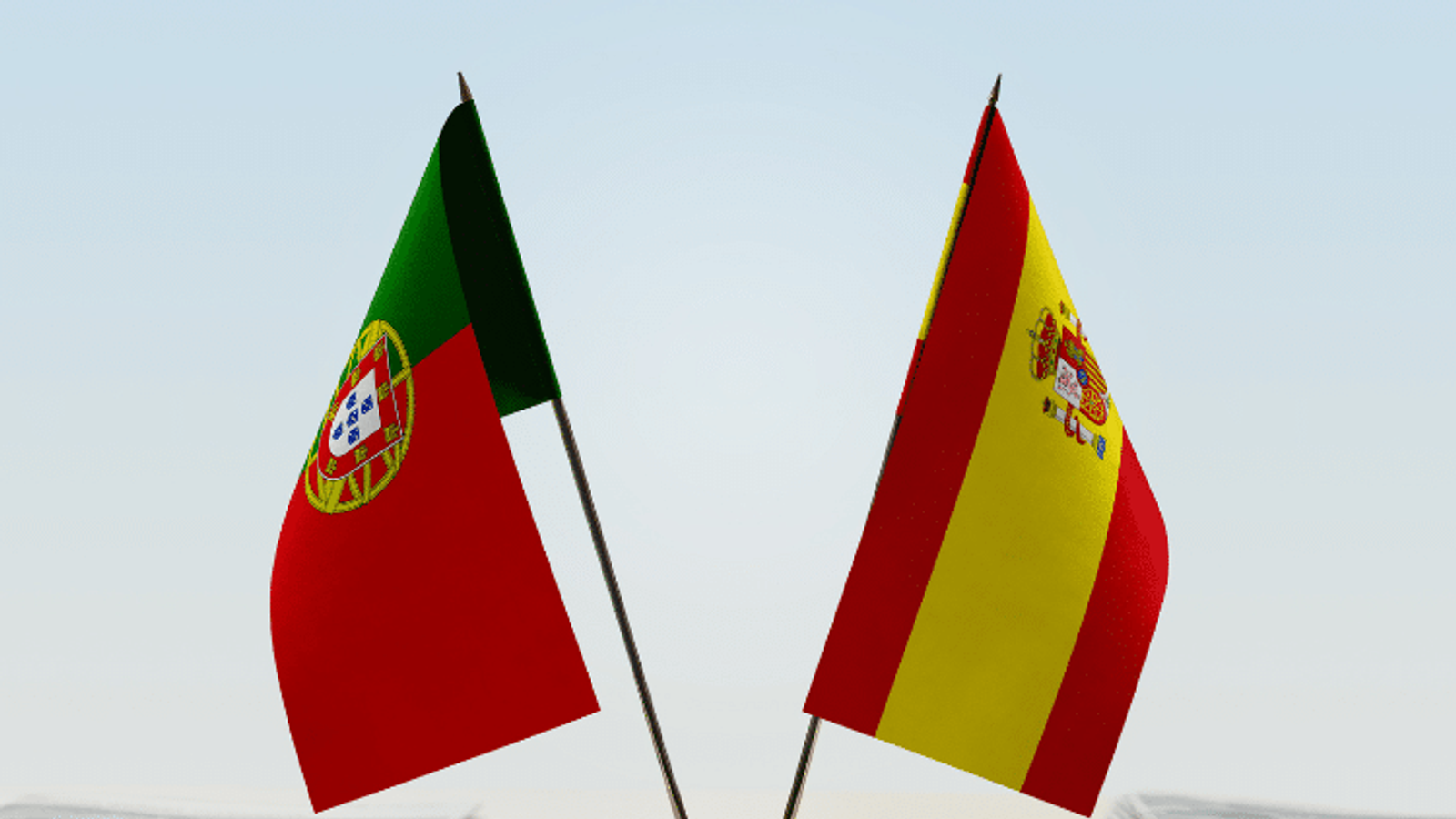
It’s always been a difficult decision to choose between Portugal and Spain. Moving to the south of Europe is a dream for many people. Let’s do an in-depth analysis of which country of the Iberian peninsula fits an expat’s ideal lifestyle better!
Generally, both countries are similar to a great extent, be it the southern Europe climate, way of life, people, food, landscapes, and a lot more. We’ve got some good news for you: Viv Europe can make your relocation to Spain come true, too! No matter which country you choose between the two, we’ll help you get there!
However, some major differences make both the neighboring countries rivals for quite a long time. And the differences that make one expat think about choosing a better one for his residence. Read all about living in these countries and choose the best one for yourself!
Portugal or Spain? Why expats choose them
Expats make a difficult decision to be away from their homeland. Leaving their comfort zone for the desired opportunities and luxuries they’re somehow not getting in their homeland. Both Spain and Portugal are idealized in the mind of the world as Iberian paradises of sun, food, and human warmth.
But with the relocation process, there are some concerns to consider. For example, quality and cost of life, tax benefits, visa application, and a few others, on which one won’t compromise.
The world is full of possibilities. You can go anywhere and settle, coping with the cultural shocks. However, expat life may be exciting on one end and challenging on the other end. But what is your dream destination?
Differences between the countries
While both countries are similar in some regards, you’ll find many differences between the culture, everyday life, and even the meals they eat. From different ways of greeting people to what language they speak most commonly, you should be aware of the contrasting lifestyles.
Given below is the comparative analysis for those deciding to come and live in Western Europe. We are considering the two charming options, either Portugal or Spain.

Let’s talk about some key factors that expats think of when considering living in either of these countries.
Which route can you actually qualify for?
Weather and beaches do not separate these two countries. Your income, your passport, your working arrangement and the city you actually want do. So the most useful comparison we can give you is what each country asks you to earn, because the answer flips depending on which route you need.
| Route | Income guideline (2026) | Based on |
|---|---|---|
| Portugal D7, passive income | around €920 per month | Portuguese minimum wage |
| Spain Non-Lucrative Visa | around €2,400 per month | 400% of Spain's IPREM |
| Spain Digital Nomad Visa | around €2,849 per month | 200% of Spain's SMI, annualised |
| Portugal D8, digital nomad | around €3,680 per month | 4x the Portuguese minimum wage |
Read that table twice. If you live on a pension or other passive income, Portugal asks for roughly a quarter of what Spain does. If you work remotely, Portugal asks for around €830 a month more than Spain. There is no single easier country. There is only the route you actually qualify for.
Each route has its own guide: the Portugal D7, the Portugal D8, the Spain Non-Lucrative Visa and the Spain Digital Nomad Visa. If you are weighing the two passive-income routes against each other, our D7 vs Non-Lucrative Visa comparison goes deeper.
Both countries also expect savings, health cover, a clean criminal record and proof of accommodation, and every threshold rises with each dependant. Spain's non-lucrative visa adds 100% of the IPREM, about €600 a month, per dependant. The digital nomad visa adds about €916 for the first family member and €305 for each additional one. These figures move each January with the underlying minimum wage or IPREM, so confirm them for your own household before committing to anything.
Cost of living in each country
The first thing to consider when relocating to a new country is undeniably the cost of living. Living in Spain isn’t out of reach, but the cost of living in Portugal is a fraction cheaper.
Lisbon and Porto are the most expensive cities in Portugal. However, the cost of living there is lower than that in Madrid or Barcelona. From food to residency, Portugal usually offers you many more affordable rates than Spain.
Is Portugal cheaper than Spain?
Overall, living costs in Portugal run a few percent below Spain’s, around 5.6% lower according to Numbeo (2026), with even more savings if you settle away from the city centers. That’s one major reason expats tend to choose Portugal, though rents have risen sharply and are now, on average, roughly on par with (or slightly above) Spain’s.
Take a look at the comparative summary of the costs of living in Portugal and Spain, according to Numbeo.
| Expenses | Portugal | Spain |
|---|---|---|
| Family of four estimated monthly costs (without rent) | €2,324 | €2,419 |
| A single-person estimated monthly costs (without rent) | €658 | €686 |
| Apartment Rent (1 bedroom) in City Centre | €927 | €936 |
| Apartment (3 bedrooms) in City Centre | €1,675 | €1,519 |
Estimates are from Numbeo (as of 2026).
Also, if you’re not going to live in big cities and are looking for calmer, smaller towns like Braga or Évora, the rents in Portugal are even much lower than that of Spain. For Spain’s cities, you can also find more affordable prices in Malaga, Valencia, or Seville. There are plenty of options in both!
Some expats even prefer to live in smaller towns, not just because of cheaper rent, but also because of the privacy and peace.
What a month actually costs, by city
National averages mislead people who are moving on foreign income, because they are not adjusted for local wages. The city you pick matters far more than the country. These are all-in monthly budgets for one person, from our own city guides.
| City | One person, all in |
|---|---|
| Braga, Portugal | €1,300 to €1,500 |
| Porto, Portugal | €1,700 to €2,000 |
| Madrid, outside the centre | around €1,888 |
| Lisbon, Portugal | €1,850 to €2,250 |
| Madrid, central | around €2,212 |
Madrid, the capital of the country everyone calls expensive, sits below Lisbon and only a little above Porto. Rent drives almost all of the difference. A one-bedroom in central Barcelona runs about €1,436, Madrid about €1,280 and Valencia about €1,235. Step outside the centre and those fall to roughly €1,092, €997 and €908. A family of four in Madrid, in a three-bedroom outside the centre, comes to about €4,554 a month. Treat all of these as planning ranges rather than quotes.
The month nobody budgets for
Almost everyone budgets the monthly number and forgets the arrival. For Spain, our own figures put deposits plus first month at €2,500 to €4,000, with the security deposit alone at €1,000 to €2,000. Temporary accommodation while you look runs €60 to €200 a night. Long-stay national visa fees are roughly €100 to €150, and a one-way flight from the US is about €500 to €900.
That is several thousand euros before your first normal month even begins, and it is the single most common reason people arrive more stretched than they planned to be.
The labor market in Portugal and Spain
Here is one difference that can spark some second-guessing in the minds of expats. Although the locals and expats can live reasonably well on a budget in Portugal, the labor market isn’t as evolved as in Spain’s major cities.
From the salary point of view, Portugal does not offer a great salary as compared to Spain. The job market in Portugal is known for being very competitive. On the other hand, Spain has a stronger economy and higher-paying jobs.
Despite Spain’s strengths, it still carries one of the higher unemployment rates in the EU, around 10.8% in early 2026, though far below its past peaks. If you’re a digital nomad with a remote job, Spain might be perfect for you, like it is for many others!
Minimum wage: Portugal vs Spain
Look at the table to get to know a few facts about work in Portugal and Spain.
| Data | Portugal | Spain |
|---|---|---|
| Minimum wage (monthly) in 2024 | €820 | €1,134 |
| Average salary (monthly) | €1,833 | €2,250 |
| The unemployment rate in 2022 | 6.5% | 11.6% |
In both Portugal and Spain, the areas of information technology and biotechnology are on the rise. The labor market in both countries is currently more competitive than before. Even so, working conditions are good, and telecommuting is increasingly widespread.
Portugal also offers an easier way out for digital nomads who want to enjoy living here. Through the D8 Digital Nomad Visa, expats no longer have to worry about setting up a business or proving passive income resources to work remotely in Portugal.
Transport
As we’ve mentioned earlier, both countries offer good quality and standard of living. This also means that there is easy access to healthcare and a comfortable transport system.
Portugal’s public transport consists of the metro, trams, buses, and trains. Lisbon and Porto are the only two metropolitan cities that are facilitated with well-connected metros. In other parts of the country, it’s easy to travel by bus or tram.
Fuel, on the other hand, is noticeably cheaper across the border: in mid-2026, a litre of petrol costs roughly €1.50 in Spain versus about €1.92 in Portugal. The national roads in Spain are also of better quality than in Portugal, and almost no tolls are paid.
But, with a more confident and growing economy, Portugal offers many reasonable opportunities for education, health, and transport systems as that of Spain.
Climate
While setting up in other countries, you may consider climate among the major factors. Also, health is highly dependent on the climate in which a person lives.
Spain’s weather conditions vary; in some regions, it goes from extreme hot to extreme cold. While Portugal faces more uniform weather, with the summers experiencing high temperatures and cool sea breezes and wet warm winters. Usually, the weather in Portugal pleases expats more often than in Spain.
Take a look at the table to understand what the average temperature looks like throughout different seasons.
| Country | Spring | Summer | Autumn | Winter |
|---|---|---|---|---|
| Portugal | 15.4 ºC(59.72 ºF) | 22.4 ºC(70.52 ºF) | 18.1 ºC(64.58 ºF) | 11.8 ºC(53.24 ºF) |
| Spain | 10.9 ºC(51.7 ºF) | 23.9 ºC(75 ºF) | 17.4 ºC(63.4 ºF) | 7.9 ºC(46.2 ºF) |
Data from the Climate Data website.
Security
Both countries are safe to live in as there is not a huge amount of violence. Although there are street crimes, people do get robbed, get their car stolen, their wallets pinched, and bags snatched, and all of those things that happen in other European nations do happen in both these countries as well.
But from a security point of view, both countries are safe to live in as there is no gun culture and no crimes related to alcoholism. Although for a few years, Spain did face terrorist attacks and had a problem with terrorist groups in the past, it is a peaceful place to live.
On the other hand, Portugal had never experienced any such terrorist attacks. But that risk did exist across the whole of Europe.
With that being said, according to the 2025 Global Peace Index, Portugal ranks as the 7th most peaceful country in the world, while Spain sits at 25th. So there is a significant difference, even if a commoner might not notice it in everyday life.
- For a complete analysis of what it is like to live in Portugal, also read our Complete Guide to Live in Portugal.
Immigration Law
Being a member of the Schengen Zone, both countries have the same visa values, and immigrants must undergo a similar process and rules to get a permanent resident permit.
The residency-by-investment routes, however, differ significantly between the two countries.
Portugal still runs a Golden Visa, but since 2023 it no longer accepts real-estate investment, the qualifying routes are now investment funds (from €500,000), cultural or heritage donations (from €200,000), job creation and similar. After five years of legal residence you can apply for permanent residence; note, however, that under Organic Law 1/2026 (in force since 19 May 2026) Portuguese citizenship now requires ten years of residence, or seven for nationals of Portuguese-speaking (CPLP) countries. Spain, by contrast, abolished its Golden Visa entirely on 3 April 2025; newcomers there now rely on options like the Non-Lucrative Visa or the Digital Nomad Visa, and Spanish citizenship still takes at least ten years.
So in case you’re looking for permanent residency, there’s quite a difference between Portugal and Spain.
The visa is the beginning, not the end
Getting the visa is not the finish line. Both countries then expect you to register yourself locally, and the order you do it in matters more than the list itself.
In Spain you will deal with:
- The padrón, your address registration at the town hall
- The NIE, the foreigner identification number
- The TIE residence card, where it applies to you
- Social Security registration
- Tax and healthcare registration
- A digital identity for the government portals
In Portugal:
- The NIF, your tax number
- The NISS, your social security number
- Residence registration, or the AIMA permit
- Registration with the health service
- Updating your tax address
- A Portuguese digital authentication method
One office routinely asks for a document another office has not issued yet, and proof of address is usually the first wall people hit. Bring organised digital and paper copies of everything, and check which documents need an apostille or a certified translation before you fly, not after.
Taxes
Let’s talk about the biggest concern for an expat to choose between Portugal and Spain, that is, without a doubt, taxes.

For many years, Portugal’s NHR regime gave expats a flat 20% rate on Portuguese-source income and exemptions on most foreign income for ten years. It closed to new applicants on 31 March 2025 and has been replaced by the IFICI regime, often called “NHR 2.0”, which keeps the 20% flat rate but is aimed at scientific research, innovation and other qualifying roles, available only under certain conditions.
The Non-Habitual Tax Resident Regime was a major attraction for expats who wanted to focus on their savings for a few more years. It mainly targeted individuals who fall into the category of passive income earners and highly qualified workers. Get a Complete Analysis of the Non-Habitual Resident Regime in Portugal in our full article.
Spain, on the other hand, has its own incentives, most notably the “Beckham Law”, which lets many new residents be taxed at a flat 24% on Spanish employment income (up to €600,000) for up to six years, plus a favourable tax regime attached to its Digital Nomad Visa. Tax rules change often, though, so check the latest position before you move.
Do not confuse a residence visa with tax residence
These are two different things, and conflating them is the most expensive mistake we see. In both countries, spending more than 183 days there can make you tax resident, but it is not the only test. Your habitual home, your family situation and your centre of economic interests can all count.
Tax residents may also have to report income and assets held outside the country. If you are a remote worker, company owner, freelancer, investor, pensioner or property owner, get personal advice before you move rather than after. And do not assume a special regime automatically applies to you, or that holding a visa shields you from local tax and social security obligations.
Culture
Since some people like to know about cultural differences beforehand, we thought we’d let you know of the few key differences you’ll come across.
In Spain, it’s common to greet each other with a handshake, while the Portuguese usually go in for a big hug. Of course, you can practice your own physical boundaries as you please, but the Portuguese are generally very friendly people.
Another difference between the Spanish and Portuguese culture exists in the timing of meals; Spanish people might have a beer and a pincho de tortilla around 1 pm, whereas the Portuguese would be preparing to eat lunch at that time. In Spain, people would usually eat around 3 pm.
It’s also observed that Spain seems to be more culturally diverse. This is mainly due to the fact that Portugal gained popularity only fairly recently and Spain has been famous for more than just a few years now. And with Portugal’s popularity, people worldwide have added to the country’s diversity, so you’ll fit right in no matter where you are.
Healthcare, language and daily life
Both countries have public healthcare, but access depends on your residence status, employment, social security position and registration. Many new arrivals run private cover while the public registration completes, which in Spain is roughly €50 to €150 a month. If you are an EU citizen, treat the EHIC as cover for temporary stays rather than a substitute for arranging proper cover after a permanent move.
Spain gives you a larger labour market, more big cities and real regional variety. Spanish is essential for most local work and admin, and some regions also use Catalan, Basque or Galician. Portugal is smaller and easier to move around. English goes a long way in international and tourism-facing settings, but Portuguese matters quickly once you are dealing with public services, contracts and local professionals.
Learning the language is what turns either move from a long holiday into a home.
Ten questions to answer before you choose
If you only do one thing with this article, answer these honestly before you commit to either country.
- Which residence route do I genuinely qualify for?
- What will my income look like after tax?
- Can I afford the city I actually want, rather than the national average?
- Will I work locally, or keep earning from abroad?
- What healthcare cover will I have, and from when?
- Do I need schools, childcare, a car or frequent flights home?
- How willing am I to learn the language?
- Can I tolerate administrative delay and uncertainty?
- Have I spent time there outside the holiday season?
- Does the daily lifestyle suit how I actually want to live?
The best choice is not the country with the lowest averages or the friendliest-sounding visa. It is the one where your finances, legal position, work, family and lifestyle hold together for years, not months.
Bottom Line: Portugal or Spain?
To wrap up this analysis comparing Portugal and Spain, a lot of people tend to think that both countries are similar, but the deeper you dig, it’s not the case.
Portugal is smaller in population, and the area offers more advantages to expats as compared to Spain. Affordable living, residency, easy access to social activities, and a pleasant year-round climate make Portugal preferable to Spain.
However, each person has their own experience and perspective on the two countries from the Iberian peninsula.
It is impossible to say that one is better than the other, prettier, or richer in culture. They’re just different, and it’s definitely worth getting to know them both. It doesn’t matter which one you lean towards because, with Viv Europe, we can make relocating to both possible for you! Our relocation experts can guide you about Visa assistance and real estate in Portugal and Spain. From there, it’s an easy ride because Viv Europe is here to help every step of the way!
If you need more opinions, join our Facebook Group – All About Portugal For Expats and talk to people who made the same decision you’re about to. Once you’re ready to make this dream come true, book a consultation with Viv Europe and start your relocation process!