 Portugal

Americans move to Portugal by getting a long-stay (national) visa, usually the D7 for passive income, the D8 for remote workers, or the Golden Visa for investors. You apply at a Portuguese consulate in the US, then convert that visa into a residence permit with AIMA after you arrive. Most moves take four to nine months, and the path can lead to permanent residency and, eventually, citizenship.
I've lost count of how many kitchen-table conversations I've had with Americans who say the same thing: “We've been talking about Portugal for two years, and we have no idea where to actually begin.” If that's you, you're in the right place. This guide is the one I wish someone had handed our very first clients. It's everything we tell people on their first call, written down, distilled from helping more than 3,500 families make this move.
I'm going to be straight with you throughout, including about the parts that have gotten harder in 2026. Portugal is still one of the best places an American can move to. It's also a country that has changed several of its rules in the last two years, and some of the advice floating around online is now flat wrong. I'll flag those moments as we go.
Take a couple I'll call Mark and Susan, both 58, from just outside Austin, Texas. They visited the Algarve once on vacation, came home, and couldn't stop talking about it. He had recently sold a small business; she was winding down a nursing career. They didn't want a gated-community retirement in Florida. They wanted walkable streets, real markets, and a train to the rest of Europe. About eighteen months later they were renting a two-bedroom in Tavira, learning Portuguese on Tuesday nights, and texting us beach photos in November.
You don't have to take my word for any of this. We've published the full stories of clients who've actually done it, like Damon Johnson, who swapped the US for a quieter life in Portugal, and Kenneth Cole, whose move we talked through from start to finish. Their reasons differ, but the relief in their voices once they were settled is identical.
Here's Kenneth telling his story in his own words:
Why Americans are moving to Portugal in 2026
The numbers tell the story better than I can. Americans are now one of the fastest-growing groups settling in Portugal. According to AIMA, the country's immigration agency, the number of US nationals living here passed 19,000, with 19,258 in 2024, up from 14,129 the year before, a jump of more than 36% in a single year (as reported from AIMA's data by Portugal Resident). A decade ago you'd rarely meet another American outside Lisbon. Today there are book clubs, Thanksgiving dinners, and WhatsApp groups in towns I'd never have guessed.

People come for different reasons, but the same handful comes up on almost every call. Safety is a big one, especially for families and people moving on their own. Portugal consistently ranks among the safest countries in the world, and you feel it walking home at night. The cost of living, while no longer the bargain it was in 2015, still stretches a US income or retirement fund further than most of the States. There's the climate, the slower pace, the ocean. And there's the EU access, which means that once you're a resident, the rest of Europe is a cheap flight or a train ride away.
Then there's the American community itself, which surprises people. You won't be the only one figuring this out. That matters more than most realize when you're 6,000 miles from home.
Can Americans move to Portugal?
Yes. This is the first thing I have to clear up on almost every call, so let me be precise about it.
As an American, you can visit Portugal for up to 90 days in any 180-day period without a visa. That's tourism. It is not a way to move here. To actually live in Portugal, you need a long-stay national visa, which you apply for before you leave the US, and then a residence permit once you arrive.
The good news is that Portugal has clear, well-trodden routes for exactly the kind of people who tend to call us: retirees, remote workers, and investors. The hard part isn't whether you're allowed to come. It's choosing the right route and getting the paperwork right the first time.
The main visa routes
Almost everyone we work with ends up on one of three visas. Here's how they compare, and who each one actually suits. (Figures are current for 2026 and tied to Portugal's minimum wage, which rose to €920/month this year, so expect them to nudge up again next January.)
| Route | Best for | Key requirement (2026) | Typical lead time |
|---|---|---|---|
| D7 | Retirees and anyone living on passive income: pensions, Social Security, dividends, rental income | Stable passive income of at least €920/month (one person), plus 50% for a spouse and 30% per child | About 4 to 8 months |
| D8 (Digital Nomad) | Remote employees and freelancers still earning active income | Remote income of about €3,680/month (4× the minimum wage), plus 50% spouse / 30% child | About 3 to 6 months |
| Golden Visa | Investors who want residency with very little time spent in Portugal | €500,000 in a qualifying investment fund (the real-estate route is closed) | About 6 to 12 months |
A quick word on each. The D7 is the workhorse for our retired clients. If your income shows up whether or not you go to work, this is usually your visa. The D8 is for people still drawing a salary or freelance income from US clients while living here. The Golden Visa is a different animal: it's an investment route for people who want the residency benefits without committing to living in Portugal full-time. It's the slowest and priciest of the three, and the old real-estate option is gone, so today it's really a fund-investment program.
Not sure which one fits you? This is the single most common place people get stuck. Book a free eligibility call and we'll tell you honestly which route makes sense for your situation, or whether now is even the right time.
Step by step: how the move actually works
Here's the part most guides get wrong. They give you a tidy list that doesn't match how it really unfolds. This is the real sequence, with the durations we actually see.
- Get your NIF (1 to 2 weeks). The NIF is your Portuguese tax number, and almost nothing happens without it. No bank account, no lease, no utilities. You can get one remotely before you ever set foot here. Start with this.
- Choose your visa (this is where it lives or dies). Pick the wrong route and you can waste months. I'll come back to this at the end, because it's the mistake we see most.
- Open a Portuguese bank account and show your funds (1 to 3 weeks). Most visas require you to demonstrate income or savings in a Portuguese account.
- Gather and prepare your documents (3 to 6 weeks). FBI background check, proof of income, accommodation, health insurance, the application forms. Several documents need an apostille and a certified translation. This stage trips up more DIY applicants than any other, usually because one document expires while they're waiting on another.
- Book and attend your consulate appointment. You apply at the Portuguese consulate that covers your US state. Appointment availability swings wildly between consulates. Some have slots next month, others are booked out for half a year. This is the single biggest variable in your timeline.
- Receive your visa and travel to Portugal. Your initial visa is your entry ticket. The clock on your real residency starts when you land.
- Attend your AIMA appointment for biometrics. AIMA is Portugal's immigration agency. After you arrive, you'll have an appointment to give fingerprints and finalize your residence permit.
- Receive your residence permit (roughly 30 to 90 days after biometrics). This card is the thing that makes you a legal resident. From here, you renew it on a set schedule and start counting toward permanent residency.
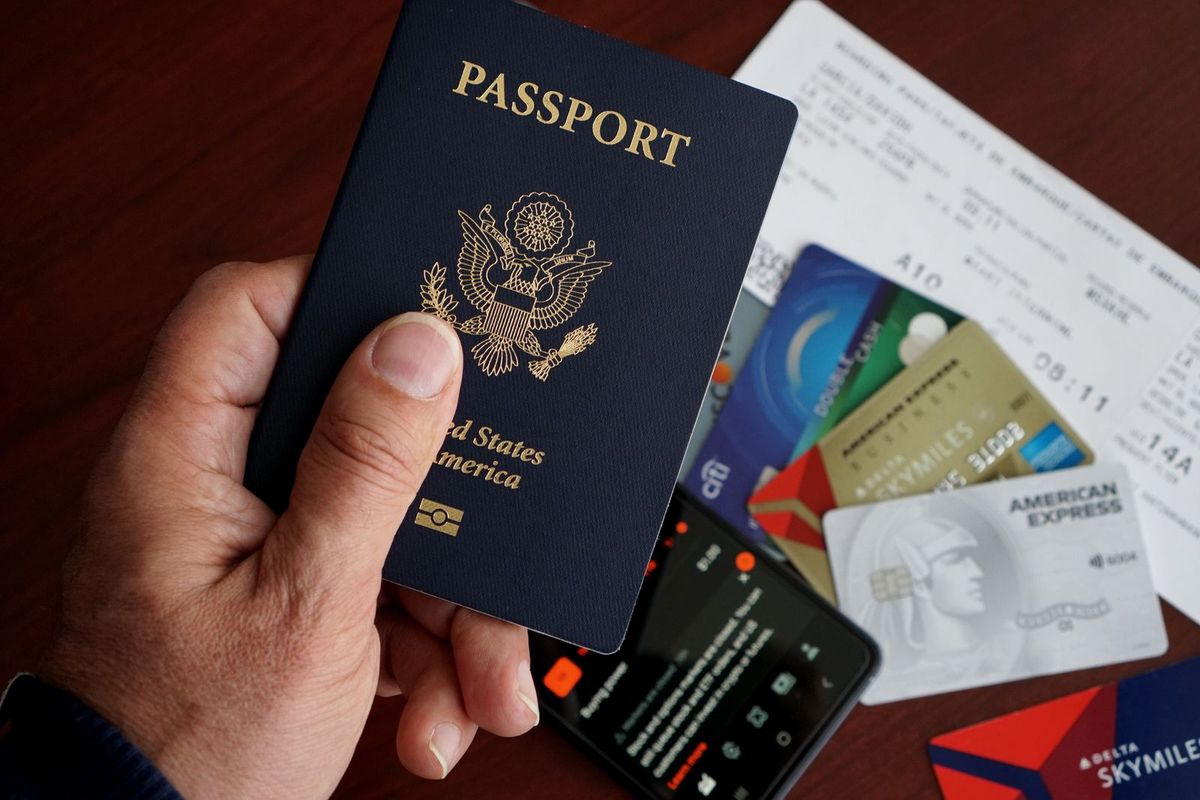
Add it up and most people are looking at four to nine months from “we're doing this” to “we live here.” The D8 is often the quickest. The Golden Visa is the slowest.
Take the Hendersons, a family of four we worked with. They started gathering documents in March, hit a wall in early summer when their FBI background check arrived just as their first apostille was about to expire, re-ordered both in the right sequence, sat for AIMA biometrics in September, and were holding their residence permits by November. Eight months, one avoidable scare, and Thanksgiving in Cascais.
A real Golden Visa timeline: K.'s story
Investors always ask how the Golden Visa actually plays out month to month, so here's a recent one, anonymized for privacy. We'll call him K. He came to us as an investor with a wife and two daughters.
K. made his qualifying investment (€500,000 into a regulated Portuguese investment fund) in late February. His application was formally registered in mid-March, and the government analysis fee (about €630) was settled in April. From the first document review to a registered application took roughly three months.
It wasn't friction-free, and that's the point. His criminal-record certificates had been issued and apostilled too early; because AIMA wants them issued within 90 days of submission, we had him re-request and re-apostille fresh ones, which added about two weeks. The family's older marriage and birth certificates were flagged as something Portugal might ask to be updated later. And right after submission, AIMA's portal glitched and failed to generate the payment reference, so we had to chase it down in person before the fee could be paid.
What made the difference was sequencing and legwork: we pulled his Portuguese social-security certificate internally so he didn't have to, kept every document inside its validity window, and stayed on top of the bank and the portal until the fee cleared. The application went through, and we moved straight on to linking his wife and daughters.
How much it costs
I'll give you the honest version, because the cheerful “you can live on $1,500 a month” posts do people a disservice.
The visa itself has income or investment requirements (the table above) and separate application fees, which are modest by comparison. The real budgeting question is your first year on the ground. Between a rental deposit (often two to three months up front), furnishing a place, health insurance, the move itself, and the inevitable surprises, a realistic first-year budget for an individual lands somewhere around €15,000 to €30,000 beyond your ongoing living costs. Couples should plan for more.

Day-to-day, your money does go further here than in most American cities, especially outside Lisbon and Porto. Groceries, restaurants, transport, and healthcare are all noticeably cheaper. Housing is the one that's caught up. Rents in the popular expat areas have climbed hard, and that's the number you should research most carefully for the specific town you're considering. (See our full breakdowns of Portugal's cost of living and how much money you really need to move.)
Taxes for Americans
This is the section where I have to deliver some news, because the internet is full of outdated advice here.
For years, Portugal's NHR program let new arrivals, including retirees, pay very little tax on foreign income. You'll still see guides and YouTube videos selling that dream. NHR is closed to new applicants. It was replaced by a regime called IFICI, sometimes marketed as “NHR 2.0,” and here's the part that matters for our retired readers: IFICI is aimed at certain skilled professionals and explicitly does not cover retirees or pension income. If you move here on a pension today, that pension is generally taxed at Portugal's normal progressive rates, which run from roughly 13% up to 48%.
I'm not telling you this to scare you off. I'm telling you because I'd rather you hear it from us now than discover it from an accountant after you've moved. Most of our retired clients still make the move and are happy they did. They just go in with eyes open and plan for it.
The other piece of good news: you generally won't be taxed twice. The US–Portugal tax treaty and the foreign tax credit system are designed to prevent double taxation on the same income. But as a US citizen, you never stop filing US tax returns, no matter where you live, and you'll likely have FBAR and FATCA reporting on your foreign accounts. This is genuinely a “hire a professional who knows both systems” situation. Please don't wing it. (Here's our deeper guide to taxes in Portugal.)
Healthcare, banking, and housing
Healthcare. Portugal has a public health system (the SNS) that residents can access, and it's solid. Most expats, especially in the first couple of years, also carry private insurance, which is far cheaper than what Americans are used to and gets you faster appointments and English-speaking doctors. Plenty of people use a mix of both.
Banking. You'll want a Portuguese bank account early. It's tied to your NIF, your lease, your utilities, and usually your visa application. Opening one as a non-resident is doable but has its quirks, and which bank you choose makes a real difference in how smooth your first months are.
Housing. My honest advice: rent before you buy. I've watched too many people fall in love with a region online, buy a house they'd barely seen in person, and realize six months later they'd have been happier two towns over. Rent for a year, live in the place through a winter, then decide where to live.
Residency and the path to citizenship

Your first residence permit is temporary. You renew it on a schedule, and after five years of legal residence you can apply for permanent residency. That five-year mark hasn't changed.
What has changed, and this is one of the biggest 2026 updates, is the road to a Portuguese passport. Under the new Nationality Law that took effect in May 2026, the residency requirement for citizenship went up. For most Americans (as non-EU, non-Portuguese-speaking-country nationals), the wait is now 10 years, not the five it used to be. Nationals of EU or Portuguese-speaking countries face seven. There are also new requirements: A2-level Portuguese, plus a test on Portuguese culture and history. And the clock now starts from the date your first residence card is issued.
If you already had a citizenship application in before mid-May 2026, you're generally assessed under the old rules. For everyone planning the move now, plan around the 10-year horizon. (Full details in our guide to Portuguese citizenship.)
The mistakes I see again and again
After more than a thousand of these, the same handful of errors comes up over and over. Here are the ones that cost people the most.
- Choosing the visa last instead of first. People fall in love with a house or a town and then try to find a visa that fits. It should be the reverse. Your visa determines what income you need to show, how long it takes, and what your taxes look like. Decide the route first; everything else follows from it.
- Letting documents expire. Your FBI check, your bank statements, and your background documents all have shelf lives. We constantly see applications stall because document A expired while the applicant was still chasing document B. Sequence matters.
- Underestimating consulate wait times. Two people can start on the same day and arrive months apart purely because of which consulate covers their state. If you don't account for this, your whole plan slips.
- Trusting outdated tax advice. See the NHR section above. The number of people who arrive expecting a tax deal that no longer exists is genuinely sad.
This is, frankly, why Viv Europe exists. We're not a magic shortcut, since the rules are the rules, but we've walked this path more than a thousand times and we know where the potholes are before you hit them. We help you pick the right visa, keep your documents in the right order, and avoid the delays that turn a six-month move into a fifteen-month one. (See how it played out for one of our clients.)
Ready to figure out your move? Book a free 15-minute eligibility call and we'll map out your route, your timeline, and your honest costs, with no obligation. Or grab our free Moving to Portugal from the US checklist and start with the right first steps.
Frequently asked questions
Can a US citizen move to Portugal permanently?
Yes. A US citizen moves to Portugal on a long-stay national visa (D7, D8, or Golden Visa), then gets a residence permit through AIMA. After five years of legal residence you can apply for permanent residency. Citizenship is possible later, though for most Americans the qualifying period is now 10 years under the 2026 law.
How much money do you need to move to Portugal from the US?
It depends on the visa. The D7 requires stable passive income of at least Portugal's minimum wage, which is €920/month for one person in 2026, more for a family. On top of that, budget for housing, a deposit, and setup costs; a realistic first year runs about €15,000 to €30,000 for an individual beyond living expenses.
How long does it take to move to Portugal from the US?
Most moves take about four to nine months from decision to arrival, depending on your visa and your consulate's backlog. The D8 is often fastest; the Golden Visa is slowest. After you land, AIMA biometrics and your residence permit typically follow within roughly 30 to 90 days.
Do Americans pay double tax in Portugal?
Generally no. The US–Portugal tax treaty and foreign tax credits prevent most double taxation. But as a US citizen you still file US returns (plus FBAR/FATCA) on your worldwide income, and the old NHR tax break is closed to new applicants. Its replacement, IFICI, doesn't cover retirees. Get personalized tax advice.
Is it hard for Americans to get residency in Portugal?
No. Portugal is one of the more accessible EU countries for Americans, with clear routes for retirees, remote workers, and investors. The hard part is the paperwork, the timing, and choosing the right visa, which is exactly where most DIY applicants get delayed.