 Spain
Spain

The cost of living in Madrid, Spain in 2026 comes to roughly €1,888 a month for a single person living outside the centre, or about €2,212 in the city centre, including rent. A couple should budget around €2,825 and a family of four about €4,554. Rent is the number that decides everything: a one-bedroom averages €1,395 in the centre and €1,071 outside it. Madrid is the most expensive city in Spain alongside Barcelona, and still clearly cheaper than London, Paris or Amsterdam, which is why it keeps drawing expats. Here is the full 2026 breakdown, category by category.
Despite the comparison above, Madrid still offers plenty of options that offer better value for money than the most expensive cities mentioned. From affordable neighborhoods to high-end areas, this city is a dream come true for many.
By planning carefully and being mindful of your expenses, you can enjoy all Madrid has to offer without breaking the bank. Would you like an in-depth breakdown of the cost of living? Keep reading to get an estimate.
How expensive is Madrid?
While that is entirely dependent on your lifestyle and comfort level, Madrid is generally more affordable than other major European capitals.
Like everywhere else, rent prices in central areas are higher. However, due to efficient public transport, transport costs are relatively low. As for food expenses, groceries are moderately priced, and there are lots of farmer’s markets with healthier options.
Needless to say, if you compare Madrid to other Spanish cities, it is the most expensive one since it is the capital and also very popular among tourists. Let’s break down the cost of living in Madrid by each category.
What is the cost of living in Madrid for expats?
Some factors that you’re going to want to consider are: groceries, utilities, insurance, healthcare, transport, and entertainment.
Madrid's healthcare is well regarded, and expats can access the Comunidad de Madrid public system once they work or contribute to social security. Private insurance is also an option, typically €50 to €200 a month depending on the coverage.
Utilities like electricity, water, and gas often include indirect taxes in their bills, though VAT is sometimes listed separately, depending on your provider. The cost of living in Madrid offers a balanced urban life with reasonable expenses for expats.
| Expense | Cost in Madrid (2026) |
|---|---|
| Rent: 1-bedroom in the city centre | €1,395 / month |
| Rent: 1-bedroom outside the centre | €1,071 / month |
| Rent: 3-bedroom in the city centre | €2,501 / month |
| Rent: 3-bedroom outside the centre | €1,621 / month |
| Utilities (electricity, heating, water, rubbish, 85m²) | €171 / month |
| Internet (broadband) | €30 / month |
| Mobile plan (calls + 10GB data) | €16 / month |
| Public transport pass | €35 / month |
| Meal at an inexpensive restaurant | €16 |
| Three-course dinner for two, mid-range | €60 |
| Gym membership | €44 / month |
| Average net salary (after tax) | €2,195 / month |
Figures are from Numbeo (July 2026).
How much do you need per month in Madrid? Sample budgets
Numbeo can tell you what a litre of milk costs; it can't tell you what your month actually looks like. These are realistic all-in monthly budgets for 2026, built from the figures above.
| Household | Typical rent | Everything else | Total per month |
|---|---|---|---|
| Single person (1-bed, outside the centre) | €1,071 | €817 | €1,888 |
| Single person (1-bed, city centre) | €1,395 | €817 | €2,212 |
| Couple (1-bed, city centre) | €1,395 | ~€1,430 | ~€2,825 |
| Family of four (3-bed, outside the centre) | €1,621 | €2,933 | €4,554 |
Rent and the non-rent living costs for a single person (€817) and a family of four (€2,933) are Numbeo's July 2026 figures for Madrid. Numbeo doesn't publish a couple figure, so we've assumed two adults at roughly 1.75 times one person's non-rent costs. Your own total will move with the neighbourhood, your lifestyle and whether you run a car.
Average rent in Madrid (2026)
In 2026, the average rent in Madrid is about €1,395 a month for a one-bedroom apartment in the city centre and €1,071 outside the centre. For a three-bedroom, budget around €2,501 in the centre and €1,621 further out. Rent is the single biggest line in any Madrid budget, so it's the number worth pinning down first.
Rentals in Madrid come fully furnished or unfurnished. Furnished apartments are ideal for expats and digital nomads who don’t want the hassle, but they come at a higher price.
Rental agreements may include community fees for maintenance and elevator services, but utility bills are often excluded from rent and paid separately.
Spanish rental laws require a deposit (usually one to two months’ rent), which is returned at the end of the lease if no damages are found. Many landlords require proof of income or a guarantor for expats without a Spanish credit history.
Leases typically run for one year, with the option to renew. If you use a real estate agent to find a rental, there is often a fee equivalent to one month’s rent. These agency fees are standard in Madrid and are an extra cost to consider during your apartment search.
Madrid follows national regulations on rent increases and tenant rights. Once you sign a contract, rent is usually locked in for the year, with controlled increments in subsequent years. Landlords must also comply with Spanish tenant protection laws, making renting secure for expats.
Take a look at some average prices to rent in different municipalities:
| Type of apartment | Average rent (2026) |
|---|---|
| 1-bedroom, city centre | €1,395 / month |
| 1-bedroom, outside the centre | €1,071 / month |
| 3-bedroom, city centre | €2,501 / month |
| 3-bedroom, outside the centre | €1,621 / month |
Rent figures are from Numbeo (July 2026).
The average price of purchasing real estate properties
In Madrid’s city center, smaller apartments cost more per square meter. Larger properties with terraces or additional amenities come at a premium.
Newer properties are pricier due to modern amenities, energy efficiency, and upgraded materials. However, older homes in emerging neighborhoods requiring renovation may offer better deals, but renovation costs should be considered.
When purchasing real estate in Madrid, consider additional costs such as property transfer taxes (6%-10%), notary fees, and registration costs (10%-15%). Non-resident expats should be aware that lenders typically require a 20%-30% down payment.
Madrid’s real estate market is dynamic, with property prices steadily increasing. Here’s what to expect:
| Location | Price to buy per m² (2026) |
|---|---|
| Madrid city centre | €7,983 / m² |
| Outside the city centre | €3,798 / m² |
Purchase prices are from Numbeo (July 2026).
House bills
Community fees for shared building maintenance are common in apartment complexes and cover costs for cleaning, security, and upkeep of communal areas. These fees can vary significantly depending on the property’s size and amenities, and add to the cost of living in Madrid.
Internet and TV services are essential for modern living and can vary widely in cost based on the provider and the package selected. You should consider available packages to find one that suits their needs and budget.
| Expense | Cost (2026) |
|---|---|
| Electricity, heating, water and rubbish (85m²) | €171 / month |
| Internet (broadband) | €30 / month |
| Mobile plan (calls + 10GB data) | €16 / month |
Average spending on food
Remember to consider your daily expenses, which include groceries that may vary based on your dietary preferences and shopping habits. Additionally, frequent food-related expenses like café visits or takeout can impact your budget.
It’s important to balance home-cooked meals with dining out to effectively manage overall food costs. You can shop at farmers’ markets to stock up on fresh groceries for the week and plan your meals accordingly.

| Item | Price (2026) |
|---|---|
| Milk (1 litre) | €1.11 |
| Fresh white bread (500g) | €1.31 |
| Rice (1kg) | €1.50 |
| Eggs (12) | €3.30 |
| Chicken fillets (1kg) | €7.68 |
| Beef round (1kg) | €15.75 |
| Apples (1kg) | €2.29 |
| Bananas (1kg) | €1.95 |
| Tomatoes (1kg) | €2.28 |
| Potatoes (1kg) | €1.94 |
| Onions (1kg) | €1.88 |
| Lettuce (1 head) | €1.37 |
| Water (1.5L bottle) | €0.91 |
| Bottle of wine (mid-range) | €7.00 |
| Domestic beer (0.5L bottle) | €1.07 |
Grocery prices are from Numbeo (July 2026).
Expected transport cost in Madrid
Next, if you’re not planning on buying a car, you will need to factor in transport costs in the cost of living in Madrid.
Public transport is affordable and genuinely good. The Metro de Madrid network reaches almost everywhere, and EMT runs the buses. A monthly travel pass costs about €35, which is very little next to running a car, and under-26s pay a heavily discounted rate for the whole region.
Madrid is also a very walkable city so feel free to explore whichever way you find best!
| Expense | Cost (2026) |
|---|---|
| Single bus or metro ticket | €1.50 |
| Monthly transport pass | €35 |
| Taxi (1km, normal tariff) | €1.35 |
| Petrol (1 litre) | €1.54 |
Leisure Expenses
Madrid has affordable recreational centers and sports facilities with membership fees as low as €20 to €40 per month. These offer gyms, swimming pools, tennis and basketball courts. Some facilities offer free basic access, while others charge for specialized classes.
The city also has free public parks like Retiro Park and Casa de Campo, perfect for outdoor activities, jogging, cycling, and picnics, as well as hosting cultural events and festivals.
Here are a few options for leisure you could be interested in:
| Expense | Cost (2026) |
|---|---|
| Gym membership | €44 / month |
| Cinema ticket | €10 |
| Meal at an inexpensive restaurant | €16 |
| Three-course dinner for two, mid-range | €60 |
| Fast-food combo meal | €10 |
| Cappuccino | €2.74 |
Madrid neighbourhoods at a glance
Where you live in Madrid, Spain moves your budget more than any other choice. A quick orientation before the detail:
| Area | Price | Known for |
|---|---|---|
| Vallecas | Cheapest | Lively, working-class, strong community feel |
| Carabanchel | Cheap | Up-and-coming, great metro links, art scene |
| Usera | Cheap | Multicultural, Madrid's Chinatown, good food |
| Chamberí | Expensive | Refined, traditional, central and calm |
| Retiro | Expensive | Beside the park, green, family-friendly |
| Salamanca | Most expensive | Luxury shopping, upscale dining, embassies |
Want cheaper than Madrid entirely? See the 15 cheapest cities to live in Spain, or compare against the cost of living in Spain nationally.
The cheapest areas of Madrid
Vallecas in Madrid is known for its affordable rent. It offers a lively community vibe, perfect for budget-conscious expats. It also houses the renowned Hospital Infanta Leonor.
Carabanchel is an up-and-coming area and boasts cheap housing and excellent metro connections. Then there’s a multicultural district, Usera, known for its low cost of living in Madrid and diverse dining options.
Puente de Vallecas is another affordable and well-connected area, ideal for expats seeking budget-friendly living. Lastly, with growing infrastructure and accessible schools, Villaverde is a practical option for families.
The most expensive areas of Madrid
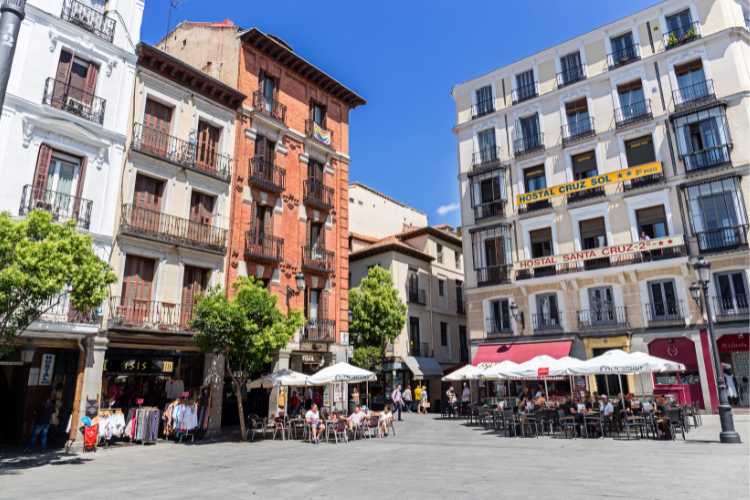
Salamanca is one of the most expensive areas in Madrid, known for its luxury shopping and upscale dining options. Chamberí offers a refined, traditional atmosphere with elegant homes and high-end amenities.
Chamartín, home to international schools and embassies such as the British Council School, provides a prestigious lifestyle.
Retiro, famous for its proximity to El Retiro Park, is a prime location, contributing to the high cost of living in Madrid. Lastly, Pozuelo de Alarcón offers exclusive suburban villas ideal for families.
Madrid vs Barcelona: the cost compared
Barcelona is another popular and expensive city in Spain. In fact, you’ll find that the cost of living is more or less equal. The only varying factor is the biggest expense: accommodation.
Whether you decide to rent or buy a property, you will find that Madrid is more expensive. And the real estate market is also much more competitive, with listings being signed within hours.
In 2026 the two capitals of Spanish city life are close to level, and on rent Barcelona has actually edged ahead: a one-bedroom in the centre averages €1,460 in Barcelona against €1,395 in Madrid. Madrid pays better, though, with an average net salary of €2,195 a month versus €2,076 in Barcelona, and buying is still dearer in Madrid at €7,983 per m² in the centre against €6,609 in Barcelona.
- Read More: Cost Of Living In Barcelona: Estimates And Tips.
Madrid vs Valencia: the cost compared
The comparison between Madrid and Valencia is more drastic. Rent prices in Madrid are 30.2% higher than in Valencia, which is a significant difference.
A one-bedroom apartment in the centre of Valencia averages about €1,250 a month, against €1,395 in Madrid, and outside the centre the gap widens: €920 in Valencia versus €1,071 in Madrid. Buying is where the difference really shows: €4,924 per m² in central Valencia against €7,983 in Madrid.
Day-to-day costs follow the same pattern. Numbeo puts a single person's monthly living costs (excluding rent) at €817 in Madrid against €725 in Valencia. The trade-off is earnings: the average net salary is €2,195 in Madrid and €1,722 in Valencia, so Madrid's higher costs come with higher pay.
The verdict on Madrid's cost of living
To be realistic, this depends entirely on your preferences and lifestyle choices. Despite being on the pricey side, Madrid is still home to over 3.23 million people and a temporary home to thousands of tourists every year. The magic of Spain’s capital is very hard to resist!
However, choosing it as your new home is a decision that requires a lot of research and reflection. We recommend that you visit Madrid before making a long-term decision. A scouting trip is a good way to assess whether the price of living in Madrid is worth it for you.
Frequently asked questions about the cost of living in Madrid
How much money do you need to live in Madrid?
In 2026, a single person needs roughly €1,900 a month living outside the centre, or about €2,200 in the centre, including rent. A couple should budget around €2,800 and a family of four about €4,500.
What is the average rent in Madrid?
About €1,395 a month for a one-bedroom in the city centre and €1,071 outside it. A three-bedroom averages €2,501 in the centre and €1,621 outside (Numbeo, July 2026).
Can you live in Madrid on €2,000 a month?
Yes, comfortably enough as a single person if you live outside the centre: roughly €1,071 rent plus €817 of living costs comes to about €1,888. In the city centre €2,000 is tight once rent hits €1,395.
What is a good salary in Madrid?
Is Madrid cheaper than other European capitals?
Yes. Madrid remains noticeably cheaper than London, Paris, Amsterdam or Dublin on both rent and daily costs, which is a large part of why it keeps drawing expats. Within Spain, though, it is the most expensive city alongside Barcelona.
Planning the move itself? Start with how to live in Spain, get your money set up with the best banks in Spain, and check whether the Beckham Law could cut your tax bill, since tax is as big a lever on your real cost of living in Madrid as rent is.
Planning your move to Spain
Spain has something for everyone – whether you’re looking to move to Madrid or somewhere else!
We recommend that you take your time to pick a city you like best. Thoroughly research your options and get advice from experts who can manage your concerns well.
Whenever you’re ready, feel free to book a consultation with Viv Europe and plan your relocation journey with ease. From visa applications to finding a property that makes you feel like home, we’re here every step of the way. See you soon!