 Portugal
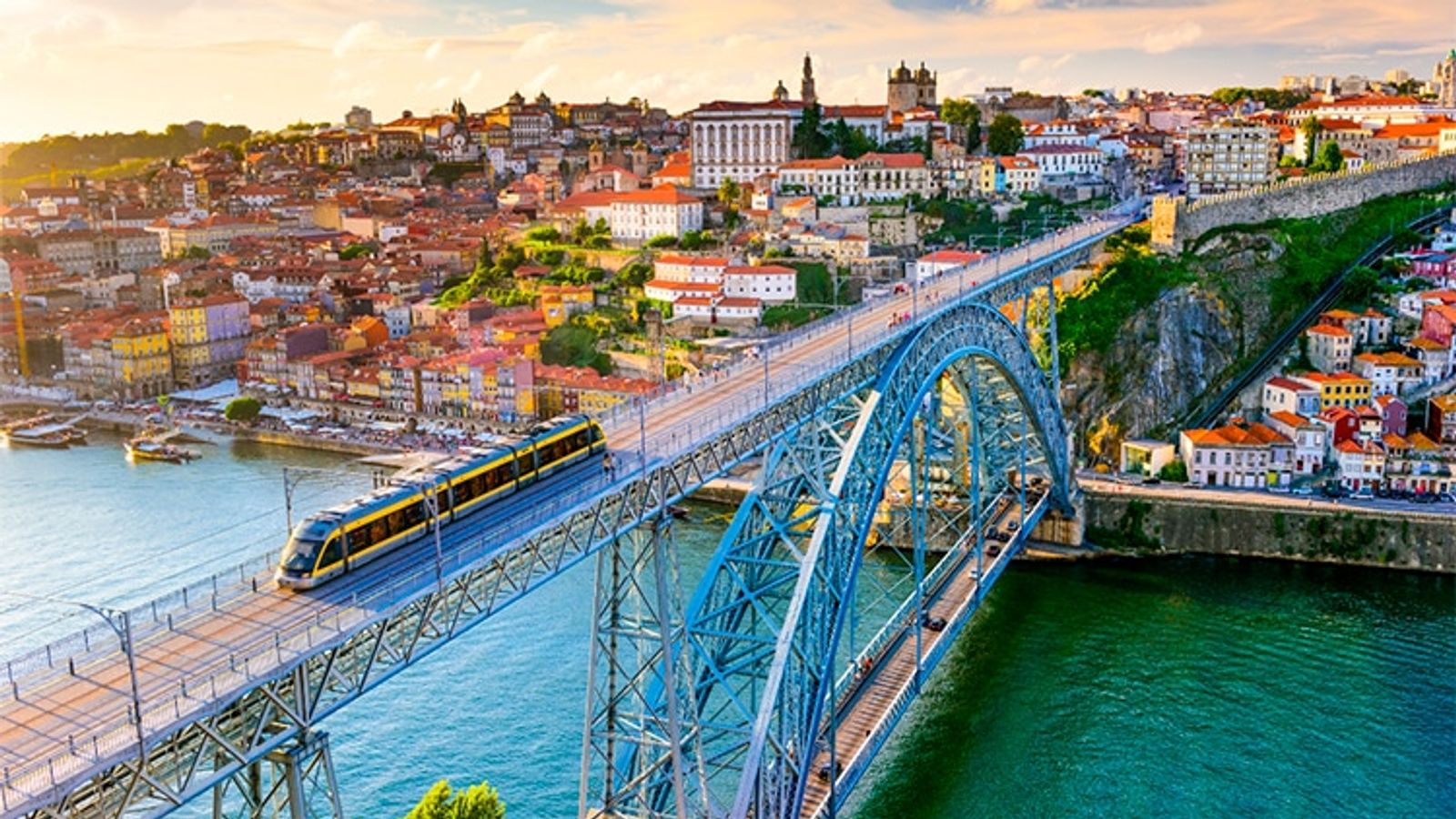
Thinking about living in Porto, Portugal? You're in good company. Just like Berlin, Barcelona, and Budapest, Porto has become a hub for artists, startups, remote workers, and international families, and it remains one of Western Europe's most affordable major cities.
But what is living in Porto actually like? How much do you need per month in 2026? Where should you live? And is it better than Lisbon, or than a smaller city like Braga?
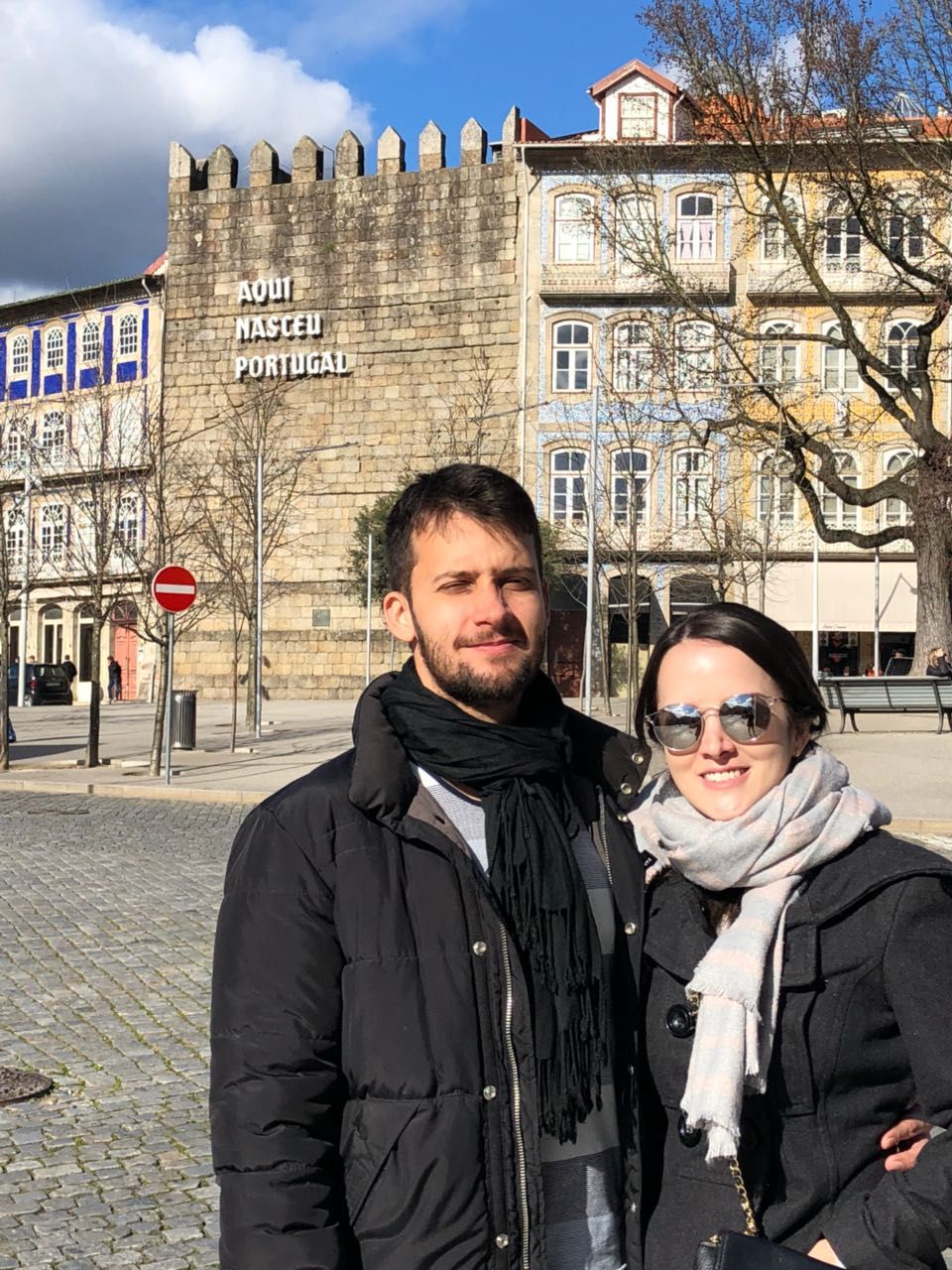
This guide answers all of it with updated 2026 prices, and with something most guides don't have: the first-hand experience of Victor Queiroz, who moved from Rio de Janeiro to Braga in 2018 and then to Porto in 2023, where he lives today.
Porto at a glance: what it costs per month in 2026
If you only read one table, make it this one. These are realistic all-in monthly budgets, including rent (sources: Numbeo, June 2026, and Porto rental market data, July 2026):
| Who | Typical rent | Everything else | Total per month |
|---|---|---|---|
| Single person (T1, 1 bedroom) | €900–1,150 | €800–850 | €1,700–2,000 |
| Couple (T1–T2) | €1,000–1,550 | €1,200–1,400 | €2,200–2,950 |
| Family of four (T3, 3 bedrooms) | €1,500–2,000 | €2,900–3,000 | €4,400–5,000 |
Porto is still roughly 15% cheaper than Lisbon overall, and renting is about a quarter cheaper. For the full breakdown, see our dedicated guide to the cost of living in Porto.
Living in Porto day by day
Porto has its own essence. People who live here are proud of their Portuense heritage, and more and more expats are joining the community. You'll soon understand why.
Greater Porto feels like a small town for those who live in it. Its beautiful streets are safe, jobs are available, and public transportation works remarkably well. The river Douro, the old buildings, and the many bridges are part of people's daily routines, and no one ever gets tired of them.
Who lives in Porto
According to the census, the city of Porto is home to over 230 thousand people, with about 1.7 million in the metropolitan area. Of the total, 52.6% of the population is of working age, 26% are elderly, and 11.4% are young.
Foreign residents are a fast-growing part of the city, too. Portugal now hosts more than 1.5 million foreign residents, an all-time record (AIMA, 2025), and the Porto region is the country's second-biggest expat hub after Lisbon.
Why are expats moving to Porto?
By now you know how popular Portugal is among tourists and investors. But the quality of life for ordinary residents is just as appealing. The main factors that attract expats to Porto:
- Lower cost of living than most of Western Europe
- Beautiful architecture and natural settings
- Good investment opportunities
- Safety and a great location
- Excellent infrastructure and an international airport with direct flights to dozens of countries
Cost of living in Porto in 2026
The cost of living in Porto varies with your habits and preferences, but here are current estimates (Numbeo, June 2026):
| Expense | 2026 cost |
|---|---|
| Apartment (1 bedroom) outside the centre | €842 / month |
| Apartment (1 bedroom) in the city centre | €1,146 / month |
| Apartment (3 bedrooms) outside the centre | €1,486 / month |
| Groceries (monthly, per person) | €300–350 |
| Utilities (electricity, water, gas) | €138 / month |
| Public transport (monthly pass) | €30–40 |
| Meal at an inexpensive restaurant | €12 |
| Leisure and sports | €40+ |
Market data from mid-2026 shows typical asking rents of about €800 for a studio, €900–1,150 for a T1, and €1,200–1,550 for a T2, with prices roughly flat versus 2025 after years of sharp increases.
Is Porto cheaper than Lisbon? Yes. Overall costs are about 15% lower, and rents about 26% lower, which is one of the reasons so many expats choose the north.
Best neighborhoods to live in Porto
Visiting and living in Porto are two very different things. Take your time with the city map before choosing where to live. Here are the neighborhoods we recommend looking at first:
Ribeira
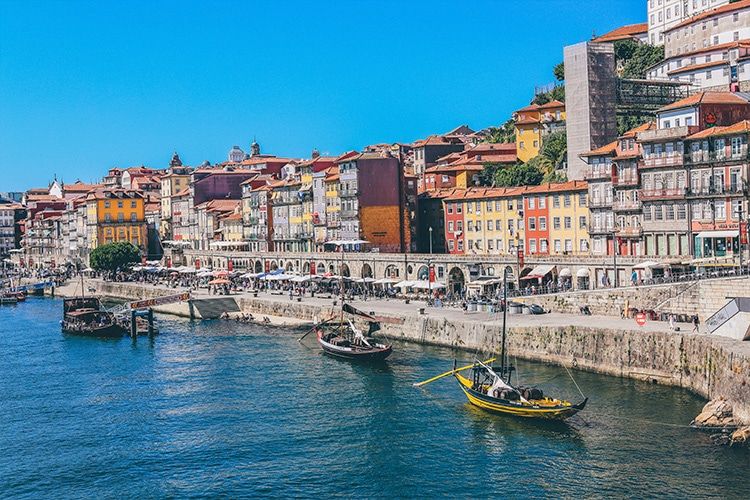
The city's postcard, full of colorful 18th-century townhouses. Living here is a dream for people who love being in the middle of it all, tourists included.
- Average price of a 100 m² property: about €437,000 (Idealista price reports)
- Most popular among expats
- Excellent access to public transport
- Few green areas and parks
- In the city centre
Boavista
A great choice for families: a residential area known for its gardens, cultural centers like Casa da Música, and excellent restaurants.
- Average price of a 100 m² property: about €352,000
- Popular among both Portuguese and expats
- Excellent access to public transport
- Many green areas and parks
- Near the city centre
Bonfim
Elected the coolest neighborhood in Portugal by The Guardian, Bonfim is full of character: Douro views, hipster bars, and Portuguese seniors at the windows. It's connected to the transport system but not flooded with tourists, and a favorite of young professionals, with studios and T1s at €850–1,300.
- Average price of a 100 m² property: about €296,000
- Popular among both Portuguese and expats
- Excellent access to public transport
- Near the city centre
Massarelos

Perfect for university students and nature lovers: home to the botanical gardens, Jardim do Palácio de Cristal, and some of the city's most stunning viewpoints.
- Average price of a 100 m² property: about €340,000
- Excellent access to public transport
- Many green areas and parks
- Near the city centre
On a budget? Look at Campanhã and Ramalde, the most affordable areas for T1s and T2s. Want the ocean? Foz do Douro is Porto's premium beachfront neighborhood, at €22–28 per m² to rent.
Renting vs. buying in Porto
Most newcomers rent first, and that's usually the right call while you learn the city. But with rents at €900+ for a T1, buying starts to make sense sooner than many expats expect, especially for those planning to stay long-term. Foreign residents can access Portuguese bank financing, typically covering up to 70–80% of the property value for non-residents and up to 90% for residents.
If you're considering it, start with our guides on how to get a house mortgage in Portugal and buying a house in Porto.
Public transport in Porto
Porto's transport system is one of the best in the country. Because the city is compact, you can rely on public transport even more than in Lisbon, and do a lot on foot. Options include the metro, buses, the famous yellow trams, and trains; most people prefer the metro because it's fast and affordable. A monthly Andante pass costs between €30 and €40 depending on zones, very little compared to running a car.
Buying a car may be useful if you live far from where you work, but most people do just fine without one. Read our guides on public transport in Porto and buying a car in Portugal.
Weather in Porto: honest expectations
Porto has a mild Atlantic climate: summers around 25°C, cooled by the ocean breeze, and winters that rarely drop below 5°C. The honest part: it rains. Porto's winters are among the wettest of any major city in Western Europe, and older buildings often lack central heating, so January indoors can feel colder than the thermometer says. Budget for a dehumidifier and decent heating, and check a building's insulation before you sign a lease.
Studying at Porto's universities
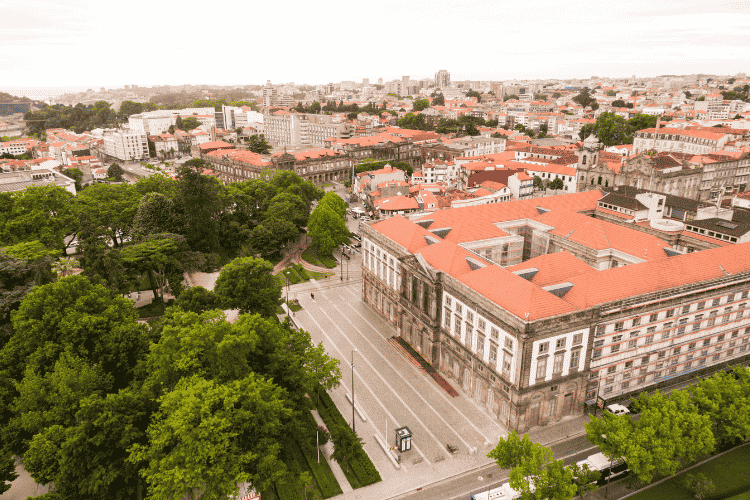
Porto is underrated when it comes to universities and the environment they provide. While Lisbon and Porto are the country's largest business hubs, Porto's education scene is more creativity-centric. The University of Porto is known for the best courses in Architecture, Civil and Chemical Engineering, and Sports Science. Massarelos is a fantastic student-friendly neighborhood.
To study in Portugal, applicants need a Study Visa: an enrollment letter, means of subsistence for a year, and a criminal record certificate. The visa costs around €90 and typically takes three to four months. Read our guide on how to study in Portugal for the full process.
Renowned institutions include the University of Porto, Portucalense University, the Polytechnic Institute of Porto, Fernando Pessoa University, and Catholic University Porto.
Labor market in northern Portugal
Along with Lisbon, Porto is one of Portugal's most important industrial and economic centers, and home to some of the country's best workplaces: Farfetch, Capgemini Engineering, Sonae, Bosch, Adidas, and Deloitte, among others.
The average net salary in Porto is around €1,411 per month (Numbeo, 2026), one of the highest in the country. The national minimum wage rose to €920 gross per month in 2026, about €819 net. Pharmaceuticals, engineering, and IT are the sectors on the rise. Read our guide on finding a job in Portugal before relocating for more.
Healthcare and education
Portugal is known for a functioning, quality public health system. Porto's hospitals and health centers are reliable, though they can get crowded. If you want short lines and fast appointments, consider private healthcare; there's a good offer of private hospitals in Porto.
Porto also has some of the best public schools in the country, taught in Portuguese. If you're looking for schooling in English, French, or German, read our article on international schools in Portugal.
Safety in Porto
Porto is known to be a safe city. Portugal ranks as the 7th safest country in the world in the Global Peace Index 2025. Pickpocketing exists in busy tourist areas and sometimes on public transport, as in any European city, so stay alert in crowds. Some locals suggest extra caution late at night around Campanhã, Pasteleira, and Aleixo.
One thing is certain: the Portuguese are welcoming, progressive, and liberal, and violent crime is rare.
Living in Porto as an American, digital nomad, or retiree
For Americans
Porto's American community has grown fast in recent years. Americans typically move on the D7 visa (passive income), the D8 digital nomad visa, or through work. Day to day, you'll find English widely spoken in the centre, US-style coworking spaces, and direct flights to the East Coast in summer. The time difference (5 hours to New York) makes remote work for US companies very doable.
For digital nomads
With fast internet, a lively coworking scene, and a cost of living well below most Western European hubs, Porto is a natural base. The D8 digital nomad visa requires remote income of roughly four times the Portuguese minimum wage, about €3,680 per month in 2026.
For retirees
Retirees love Porto for its walkability, healthcare, and culture, though some prefer the warmer, drier Algarve. The D7 visa is the usual route for those with pension or passive income. See our comparison of Lisbon, Porto or the Algarve if you're still deciding.
Leisure and nightlife
Porto never sleeps. There's always something to do: concerts, restaurants, hip bars, and a diverse community from all over the world. Sports matter here too. Soccer is a passion, and FC Porto match days change the mood of the whole city. The many parks, belvederes, and squares are perfect for picnics and sunset drinks.
Consider living in other cities in the north of Portugal
Porto's prices have risen with tourism and foreign interest. If you're looking for something calmer or cheaper, get to know the cities nearby:
Matosinhos
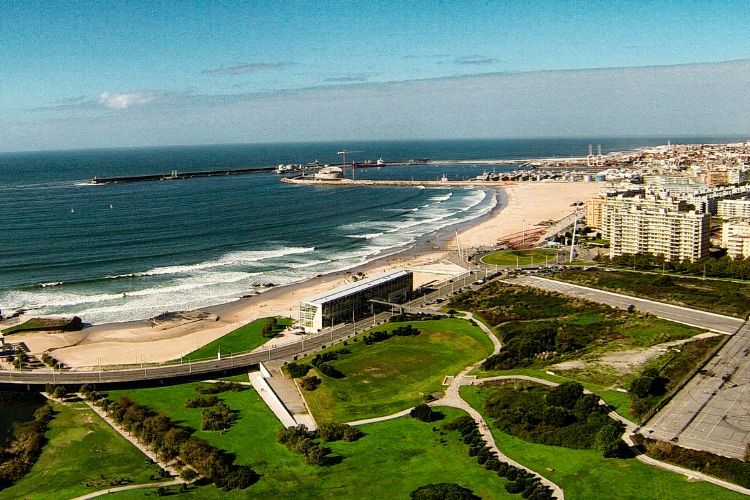
The best choice if you want to live near the sea: just 10 km from the centre, with a calmer lifestyle, some of the best seafood in Portugal, and direct metro access to Porto.
Vila Nova de Gaia
Porto's twin sister on the south bank of the Douro, known for its Port wine cellars. About 300 thousand inhabitants, noticeably lower prices, and a front-row view of Porto's skyline.
Guimarães

The birthplace of Portugal, historically essential and very traditional. Its 150,000 inhabitants enjoy a calm, humble lifestyle, and the outskirts are a paradise for nature lovers.
Braga
One of the largest cities in Portugal and an important economic centre in the north, Braga sits 55 km from Porto, about 40 minutes by car or train. It's a medieval city with a young population (thanks to the University of Minho), a growing tech scene, and prices well below Porto's.

Pros and cons of living in Porto
Pros
- Cost of living lower than most of Western Europe
- Second-largest business hub in Portugal
- Beautiful architecture
- Excellent infrastructure and international airport
- Strong expat and university community
- Safe and secure
- Top-notch education, health, and transport facilities
Cons
- Tourist crowds in the centre, especially in summer
- Bureaucracy takes patience (AIMA appointments, paperwork)
- Housing has become expensive by Portuguese standards
- Rainy winters, and older buildings can be cold and humid indoors
FAQ: Living in Porto, Portugal
Is Porto a good place to live?
Yes. Porto combines a lower cost of living than most of Western Europe with safety, good healthcare, an international airport, and a strong expat community. It's consistently rated one of the best cities to live in Portugal.
How much money do you need to live in Porto?
In 2026, a single person needs roughly €1,700–2,000 per month including rent. A couple should budget €2,200–2,950, and a family of four €4,400–5,000, depending on neighborhood and lifestyle.
Is Porto cheaper than Lisbon?
Yes. Overall costs are about 15% lower than Lisbon, and rents are roughly 26% cheaper for equivalent apartments.
Is Porto safe for expats?
Very. Portugal ranks 7th in the 2025 Global Peace Index. The main issue is pickpocketing in tourist areas, as in any major European city.
Can I live in Porto speaking only English?
In the city centre, yes. English is widely spoken, especially among younger people. For bureaucracy, healthcare, and life outside the centre, learning Portuguese makes a real difference, and locals appreciate the effort.
Should I choose Braga or Porto?
Braga is calmer and cheaper, a great landing spot, especially for families. Porto offers more jobs, a bigger social scene, and an international airport. They're only 40 minutes apart, so many expats (like our own Victor) start in Braga and later move to Porto.
Living in Porto: final thoughts

Porto is one of the best cities to live in Portugal, if not the best. You'll hardly find another cultural hub like it, where opportunities mix with art, digital nomads, and stunning scenery, at a cost most European cities can't match.
Want to talk to people who've already made the move? Join our Facebook group, All About Portugal From Expats. Still deciding? Consider a scouting trip to Portugal to be sure the city is right for you.
And remember, Viv Europe's professional team is here for you every step of the way. Contact us and let's turn your dream into a plan.