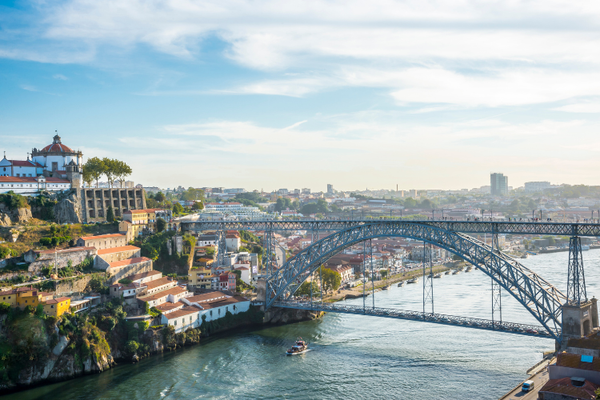
 Portugal

As you approach your golden years, the idea of retiring abroad becomes increasingly appealing. However, it’s crucial to research thoroughly to ensure the country you choose matches your ideal retirement lifestyle. If you’re considering Portugal, you’ve come to the right place. From visa procedures to healthcare, this article provides a comprehensive guide to planning your retirement journey in Portugal.
Portugal is increasingly recognized as a top choice for expats looking to retire abroad, offering a blend of affordability, lifestyle benefits, and accessible residency options.
With its mesmerizing coastlines, historic cities, and affordable living, Portugal beckons to those searching for a tranquil retirement. Let’s embark on a journey that will ignite your imagination and help you make an informed choice for your post-work paradise. Happy reading!
Why retire in Portugal?
Portugal’s landscapes, rich history, and warm Mediterranean climate have made it a magnet for retirees. People love to bask in the sun-drenched shores of the Algarve or immerse themselves in the vibrant culture of Lisbon. Recognized as one of the most affordable European countries, Portugal stands out for its low cost of living, making it a prime choice among the most affordable European countries for retirees seeking a high quality of life without high expenses.
The country has specific tax and Visa schemes to accommodate expat retirees so they don’t have to go through laborious legal processes.
The D7 Visa is a special Visa for retirees with a passive income. It is for individuals who don’t work but have investments or savings to support their living in Portugal. Almost all retirees relocate to Portugal on the basis of the D7 Visa.
Living in Portugal on a D7 Visa gives you access to the country’s renowned public healthcare system, available to all legal residents. This ensures your health is well cared for, allowing you to live comfortably.
Beyond healthcare, Portugal offers a vibrant lifestyle with plenty of leisure options, including music festivals, art exhibitions, and social clubs. Compared to other European countries, Portugal combines affordability, rich culture, and a high quality of life, making it an increasingly popular choice for retirees.
Who can retire in Portugal?
Both EU citizens and non-EU citizens can retire in Portugal. EU citizens, along with citizens from the European Economic Area (EEA) and the European Free Trade Association (EFTA), enjoy the privilege of moving and residing within the EU, including Portugal, without the need for additional visa processes, thanks to their rights under the European Union framework. This makes it straightforward to retire in Portugal.
But if you’re a non-EU citizen, you can apply for a residence permit. Portugal has inclusive policies, so don’t worry too much about the legal processes. Additionally, non-EU citizens looking to retire in Portugal may consider the Portugal Retirement Visa, which offers a pathway to residency for retirees meeting certain income requirements.
EU Countries’ Citizens
You don’t need a Visa or residence permit to move to Portugal if you’re an EU citizen. Just remember to register at your local town hall for the Certificate of Residence.
You can avail of Portugal’s facilities like healthcare via your European Health Insurance Card. And since the country has tax agreements with many EU countries, your pension will be taxed under those.
Non-EU Citizens
Moving to Portugal will be slightly more challenging if you’re not an EU citizen. You’ll have more paperwork to submit and permits to apply for. For example, you’ll need to submit a list of documents to apply for the D7 Visa.
You may also have to apply for comprehensive health insurance. If this process is unclear to you, consult with Portuguese immigration authorities or your Viv Europe representative to properly navigate the legal requirements.
Continue reading to learn more about the Visa and application process to retire in Portugal!
How is the Portugal retirement visa process?
As of February 2026, the D7 Visa remains the premier “Passive Income” route for retirees. To qualify, you must prove a stable monthly income of at least €920 (the current minimum wage threshold) from pensions, rentals, or investments. Your application toolkit must include a valid passport, clean criminal record, and health insurance. Crucially, you now generally need a Portuguese bank account and a registered 12-month lease before applying.
For those seeking more flexibility, the Golden Visa offers residency with only a seven-day annual stay requirement. While direct real estate is no longer an option, the €500,000 Investment Fund route is the most popular path in 2026. This is an ideal “Plan B” for non-EU retirees, providing a clear track to EU citizenship after five years.
Whether you choose the D7 or the Golden Visa, all applications are now processed by AIMA (which replaced SEF). Given current backlogs, starting your paperwork 6–8 months in advance is highly recommended to ensure a smooth transition to your new life in Portugal.
How is the healthcare and private health insurance for retirees in Portugal?
It’ll interest you to know Portugal boasts a reliable and accessible healthcare system, with up-to-date facilities for a reasonable price. The healthcare has both public and private options, with the former being largely free.
To access it, you simply need a Social Security number to be registered with your local health center. Be sure to have your Visa or residency permit on you. That would be the proof of legality and the key to getting your Número de Utente – user number for access to healthcare.
Also, the public health system covers emergency care, hospitalizations, and medications prescribed by doctors within the system. Some medical services, such as dental care and elective procedures, may require additional fees or private insurance coverage.
Your peace of mind in retirement is supported by Portugal’s affordable healthcare services and excellent medical facilities. For quicker access to medical care, retirees can choose private health insurance, which offers additional coverage and helps avoid the longer waiting times often experienced in the public system.
How much money do you need to retire in Portugal?
You don’t need a fortune to retire in Portugal. The country is famous for being affordable, with property prices, groceries, and entertainment all being budget-friendly! Compared to other European countries, Portugal offers a significantly lower cost of living and more affordable real estate prices, making it an attractive option for retirees.
We’ll give you a breakdown of how much you need per month, but this is different from what your Visa application will require. Your D7 Visa application will require you to deposit additional money as a safety net to prove means of subsistence.
As far as living costs are concerned, keep reading to learn about the specific costs of living in the country.
The cost of living and housing
The cost of housing, as we all know, can depend on where you want to live. If you want to retire in Lisbon, you’ll need significantly more money, But if you want to retire in the Azores, you’ll need significantly less.
If you take a look at The 15 Best Cities To Live In Portugal, you’ll understand why Portugal is a growing retirement destination! But hey, don’t expect boredom, empty streets, and no social activities here. The top big cities for expats are full of color, excitement, and lots of fun things to do, even for expat retirees.
Here’s an estimate of your main monthly expenses, covering rent, utilities, groceries, and public transport. Rent varies most by location, while utilities and groceries are generally similar across Portugal.
Take a look:
| Expense | Cost |
|---|---|
| Apartment (1 bedroom) in City Centre | €900 |
| Apartment (1 bedroom) Outside of Centre | €714 |
| Apartment (3 bedrooms) in City Centre | €1,500 |
| Apartment (3 bedrooms) Outside of Centre | €1,450 |
| Utilities | €114 |
| Groceries | €250 |
| Monthly Transport Pass | €40 |
Price estimates are from Numbeo (as of Feb 2026).
The cost of real estate
Many retirees decide to buy their own house; it’s an investment worth making!
Despite the popularity, you don’t need to be a millionaire to make this wish come true. As you can see in the table below, the cost of real estate varies greatly. The most expensive area is Lisbon, followed by the Algarve, and then Madeira.
All of which, by the way are the top three destinations for retirees in Portugal!
But even then, you can secure really good deals if you search for a property in some of the lesser-known neighborhoods. If your plans are to do exactly that, getting help from a real estate expert will help save you time and money that you can use elsewhere.
| Area | Property price per m2 |
|---|---|
| Lisbon | €4,263 |
| The Algarve | €3,899 |
| Madeira | €3,760 |
| Porto | €2,998 |
| Azores | €1,925 |
| Silver Coast | €1,829 |
| Évora | €1,602 |
Price estimates are from Idealista (as of February 2026).
The cost of dining and entertainment
Apart from groceries, you’ll want to dine out every once in a while. Portuguese culture doesn’t promote dining out and ordering fast food, but we sure do love sitting in a cafe and spending time chit-chatting on a beautiful day.
Here are some expenses you’ll incur if you’re interested in dining out and staying busy with recreational activities:
| Expense | Cost |
|---|---|
| Three-course meal for 2 at a mid-range restaurant | €45 |
| McMeal at McDonald’s | €8 |
| Imported Beer (0.33-liter bottle) | €3 |
| Cappuccino (regular) | €1.75 |
| Fitness Club | €38.59 |
| Tennis Court Rent (1 Hour on Weekend) | €14.5 |
| Cinema | €8 |
How is the banking system in Portugal?
The banking system in Portugal is connected through a network called Multibanco. This network system provides one of the most used and accepted methods in the country. But what does it mean for retirees in Portugal?
We’ll guide you through navigating the banking system in Portugal, both as an EU citizen and as a non-EU citizen. Many banks require you to be physically present to open an account, but the first step is obtaining your NIF Number, Portugal’s tax identification number.
Let’s break the process into two clear steps.
Tax identification number
Your Número de Identificação Fiscal, or your NIF Number as we call it, is the most important thing you’ll need. Not only because you’re planning to retire in Portugal but because everything you will do is connected to this number.
From renting or buying a property to getting a SIM contract and even setting up utilities in your house. And, of course, to open your bank account in Portugal.
You can apply for your tax identification number in 2 ways: in-person and online.
Applying in person means going to the Finanças office and submitting your identity card, a photograph, and proof of residency.
This process can only be done through an online tax representative, like our experts at Viv Europe, who can sort this out for you. The only additional document needed will be the Power of Attorney, and you’ll have your NIF Number in no time! This is what most expats do. It’s also preferred to do so because you need someone who can communicate with Finanças for you.
Opening a bank account
Once your NIF Number is sorted, on to the next step!
To open a bank account as a retiree, you must have the following documents with you:
- Valid identification, for example, a Passport;
- Proof of your current residence;
- Proof of your income;
- Your NIF Number.
Next, you will visit the bank of your choice and schedule an appointment. If you’re doing this on your own, you may ask to see if they have an English-speaking representative to help you. Some banks offer online account opening, but the process can be complicated for those who aren’t residents.
It may seem excessive to visit the bank physically, but remember why you’re retiring here in the first place! This is your gateway to freedom, safety, and an excellent standard of living.
To complete the process, you must deposit at least €250 when you open the account. Viv Europe can manage all this for you without the entire hassle; here’s how to open a bank account in Portugal as an expat!
- Learn more about the best banks in our article Top 4 Best Banks In Portugal For Expats!
What are the taxes for retirees in Portugal?
Portugal has long been attractive to retirees, largely because of its climate, lifestyle, and historically favorable tax policies. However, the tax situation for new retirees has changed in recent years.
The well-known Non-Habitual Resident (NHR) tax regime, which used to offer major tax advantages to foreign retirees, is now closed to new applicants. From 2024 onward, it was replaced by a much narrower incentive scheme often referred to as NHR 2.0 aimed at certain high-value professionals, not retirees. This means that new retirees moving to Portugal can no longer rely on special tax exemptions for pension income.
Does that mean you’ll spend thousands in taxes every month? Not necessarily. Portugal uses a progressive income tax system, so the amount you pay depends on how much you earn.
Portugal does not have a general wealth tax. However, once you become a tax resident, your worldwide income is taxable in Portugal. This includes foreign pensions, rental income, dividends, and interest. Double taxation treaties help prevent you from being taxed twice on the same income, but they do not mean your foreign income is exempt. In most cases, Portugal taxes the income and gives you credit for any tax already paid in the country of origin.
There is also an additional property tax known as AIMI, which applies if the total value of your Portuguese property exceeds €600,000 for an individual or €1.2 million for a married couple. Rates generally start at 0.7% and increase for higher property values.
Portugal does not charge inheritance tax. Instead, it applies a Stamp Duty of 10% on assets transferred through inheritance or gifts. This tax does not apply to spouses, children, or parents, but it does apply to other relatives or non-family beneficiaries.
Once you are a tax resident in Portugal, your pension income is taxed under the standard income tax bands. Rates start at around 14.5% for lower income levels and rise progressively to 48% for higher income brackets, with thresholds adjusted periodically by the government.
In short, retirees in Portugal today should expect their pensions and other worldwide income to be taxed under normal Portuguese tax rules, without the special exemptions that existed under the old NHR regime.
- Read more about the Portugal Tax System: Easy Breakdown For Expats.
How to move retirement funds, pensions, and secure a residence permit in Portugal?
With an NIF and a bank account, you can conveniently shift your pension and other funds once you retire in Portugal.
Your home country’s pension providers, retirement fund managers, and social security authorities will help and guide you in the transfer process. In a nutshell, you’ll need the following documents to get through the process:
- Valid Passport or identification card;
- Portuguese NIF;
- Proof of address in Portugal;
- Documents from pension providers: pension statements and details of a pension plan;
- Social Security documentation;
- Tax-Related documentation;
- Proof of Income: You’ll have to show documented proof of some cash flow;
- Your pension providers require other specific documentation.
Once your paperwork is complete, keep clear and organized records of all financial transactions related to your retirement income in Portugal. Regularly monitor your Portuguese bank account and deposits to ensure transfers proceed smoothly. Stay in contact with a tax advisor to optimize your finances and avoid any legal issues.
Where can I find retirement communities in Portugal?
You’ll be thrilled to learn that there are commendable retirement communities in Portugal to ensure comfort and companionship for expats.
Monte Da Palhagueira and the Cork Tree Residences are the two most popular retirement communities in Portugal. The former is located near Faro, Algarve, and the latter is found in Comporta near Lisbon.
These residences are known as retirement villages, where great care and leisure are available for you to relax in your golden days.
You can also check out and join our Facebook Group – All About Portugal For Expats. The group is an online expat community where you can connect with fellow retirees and expats. You can even ask the members for recommendations on cities, housing, and popular retirement circles.
Where is the best place to retire in Portugal?
As an expat, you would like the whole package of being with retirement communities in Portugal and enjoying an excellent standard of living. No matter where you are, you can expect efficient healthcare and delight in the beautiful landscapes everyone keeps raving about.
Don’t worry; many places in the country allow you to have the best of both worlds. We have listed the best places you can retire in Portugal below:
The Algarve
The Algarve’s mild climate and beautiful beaches create ideal weather for outdoor activities and relaxation – perfect for expat retirees. You can find many golf courses to spend your mornings on, among other outdoor sports like fishing.
And, of course, the region offers all necessary amenities, from laundromats and massage spas to hospitals. The healthcare facilities are exceptionally splendid, with modern equipment and English-speaking staff.
Here, Lagos is a popular choice among expat retirees as it is a picturesque old town with a welcoming atmosphere. But if you wish to mix up traditional culture with modern entertainment opportunities, Albufeira is the town for you. It is next to the sea and offers plenty of amenities, which makes it an older expats’ favorite.
Lisbon
Lisbon offers tonnes of cultural attractions like museums and theatres if you have an artsy personality. The city is also brimming with expats, so you won’t have much trouble settling in.
The city offers efficient healthcare and a highly user-friendly transport system, likely the best in Portugal. You can enjoy peace of mind knowing your health is well cared for, and that buses and trains make traveling around the city easy.
One thing you should be aware of is that Lisbon is a very busy city because it is a business hub. So, you can imagine traffic on the roads and a bustling vibe. It’s not something all retirees look for, but some do!

Porto
Porto’s lifestyle is more affordable than Lisbon and the Algarve. Though it also has plenty of amenities, including healthcare and transport, Lisbon and the Algarve precede it in terms of high quality.
The city also has unique attractions. For instance, Vila Nova de Gaia is famous for its wine cellars, offering opportunities for wine tours. You can enjoy a relaxed lifestyle daily, strolling along the coastline or exploring its parks.
Silver Coast
This area is even less costly than Porto and allows retirees to enjoy a serene and authentic Portuguese lifestyle. Retirees specifically choose the Silver Coast for a slower pace of life in a picturesque setting.
Its scenic beauty appeals to retirees as it serves as the perfect background to their peaceful and quiet lifestyle. There are three districts: Aveiro, Coimbra, and Leiria. Leiria is the one closest to Lisbon. Aveiro and Coimbra are less populated but absolutely beautiful.
Cascais
Unlike the Silver Coast, Cascais is known for its fast-paced life and luxurious lifestyle. Expat retirees usually settle here for various activities such as golf and walking trails.
This town is very close to Lisbon, which means easy access and a fast commute if you’ve got things to cater to in Lisbon.
Cascais is very well-known for its luxury and exclusivity. You can expect an even higher standard of living and, subsequently, cost of living. It’s a city that’s chosen mainly by retired business owners and the affluent.
Do you want to retire in Portugal?
If you’ve read this far, you’re probably ready to take the next step! Retiring in Portugal is a dream for many, but with proper planning and the right actions, it can become a reality. It’s not a distant wish; it’s an achievable goal.
To kickstart the D7 Visa process and get help from relocation experts, Book A Call with Viv Europe! You can sit back and relax while we work on your Visa application, housing, legal complications, and all that follows.
Trust us; this is a ride you don’t want to miss out on. Whether you start today, next week, or next month, it will be worth every minute you spend on it. Let’s make your retirement goals come true!